Wednesday, November 09, 2005

Design and Marketing

Slowly, slowly, design is being integrated into corporate marketing.
Companies are starting to accept that design can be a powerful tool to create impact.
No matter what the product or service is that a company sells, it all has to do with the perception of its customers or clients.
Marketing strategies must therefore be aimed at the target audience’s perceptions, thoughts, emotions, feelings, and attitudes.
Design must be an integral part of a company’s brand, product design and packaging.

What should a company or professional do?
  1. Start with an in-depth market research. Find out what appeals to the potential customers or clients.
    Don’t forget, each purchase decision is an emotional one that must be rationalized.
  2. Develop the overall corporate communication strategy.
    If in doubt if the strategy would work - test market.
  3. Make sure the company’s collateral, packaging of products and services, the website, sales and promotion materials are in sync.
    Never start with the product/packaging design.
  4. Make sure that all offers to customers or clients, including call center interactions, comply with the corporate communications strategy.
    Don't forget, marketing and sales are Siamese Twins.
  5. Formulate strict guidelines for all advertising and promotions activities.
    Don't forget to include subsidiaries, agents and representatives.

Nowadays, customers and clients are well informed and critical.
They want more than a sheer purchase, they want a “shopping experience.”
This applies to companies, professionals (doctors, lawyers) and consultants.
Design not only builds the brand of the company, but also creates brand loyalty, which results in brand equity. Companies that successfully applied design are Apple, BMW and Disney.

In short, marketing and PR professionals must integrate the analytical with the creative part of their work and create integrated design solutions.
The pay-off is not only drumming up new business but also creating and maintaining customer/client loyalty built on trust.

Monday, November 07, 2005

Celebrity endorsement and pharmaceutical marketing

Pharmaceutical companies routinely hire celebrities to attract attention to the latest drugs and the diseases that go with them.
Celebrities become integral to a drug marketing strategy.
Supermodel Lauren Hutton was hired to promote Wyeth’s hormone replacement therapy and menopause. GSK contracted Football star Ricky Williams was paid to create awareness of social anxiety disorder, making Paxil (briefly) the world's top-selling antidepressant.
Celebrities don’t come cheaply - according to celebrity brokers, the star's remuneration package may range from $20,000 to $2 million.
This kind of promotion is part of the drug marketing strategy, normally consisting of paid advertising and aggressive public relations campaigns. It often results in the celebrities' media appearances on Oprah,the Today Show or, as in the case of Former Texas Governor Ann Richards who blatantly promoted one of Lilly’s drugs during an interview, on CNN's Larry King Live.

What are the main rules to enlist a celebrity for product endorsement?

1) Research which A-list celebrity goes down well with the target group
2) Hire an A-list celebrity that the target group considers trustworthy
3) Find a news hook to link the celebrity to the product
4) Develop some simple (marketing) messages
5) Ensure that the celebrity delivers them at every appearance

But especially celebrity endorsement of pharmaceutical product has its downside.
One big problem: the public doesn’t always realize that the celebrity is paid for advocating a cause (and its remedy).
A good example is the promotion of irritable bowel syndrome on top-rating TV shows by Kelsey Grammer (of "Frasier" fame) and his wife. Viewers thought that they were speaking on behalf of an independent foundation. However, GSK, producer of Lotronex (a drug with side effects, including possible death) paid the couple for their endorsement.

There is also a legal aspect to it. When producers state benefits of their products, they have to back it up with hard data. Every advertisement must include warnings about side effects and possible dangers.
Celebrities, who are no experts whatsoever, can emphasize the benefits of a certain drug without the need to point out the downside of its use.
Lauren Hutton stated in magazine articles read by millions of readers: “My No. 1 secret is estrogen.” Nor Hutton, nor the magazine is (legally) obliged to mention possible side effects or dangers.

Even well-meaning celebrities, who are not being paid for their efforts, and fight for a worthy cause, have the cloud to influence health issue debates and policies.
Camilla Parker Bowles chose to make an important public statement about the bone condition osteoporosis at an international conference funded by the pharmaceutical company Lilly. For years, Camilla has been a champion for early intervention and greater use of expensive tests and technologies for the primary prevention of osteoporosis.
By appearing on the Lilly-sponsored conference, she unwittingly promoted biochemical solutions to health care problems. By doing so, the overall health care debate about equitable distribution of health care resources, including non-biochemical ones, was ignored.

And last but not least, pharmaceutical marketing using a celebrity has its own pitfalls:

  1. The campaign may oversell the celebrity and undersell the product. Using an icon might result in high recognition of the person, but no recollection of the product endorsed.
  2. There could be a discrepancy between personality and product. The target audience must believe that the celebrity uses the product for his/her own benefit.
  3. The celebrity should not be associated with too many (similar) products. Once a celebrity is promoting too many products or a similar product, the message becomes too cluttered. As a result, the target audience gets confused about the exact product that the celebrity is promoting.
  4. The product should be legitimate as a stand-alone. Even without any (celebrity) endorsement, the product should be sound, functional, and fitted for its target audience.
  5. The product should meet its expectations. After the media hype, the product should meet all the expectations that the celebrity created.

Tuesday, November 01, 2005

Marketing and the Yoga Mamas

Marketers have identified a new and powerful target group: the Yoga Mamas.
Yoga Mamas are middle- and upper-income mothers who are revolutionizing the baby-products market.
These mothers significantly different from others - for one, they are far more brand-conscious than their parents before them. They are focused on the fitness and well-being of their offspring and are extremely fit themselves, show off their pregnant bodies in “normal” clothes, dodging maternity wear.
They tend to be better educated and have more disposable income to spend on fewer children than past generations. Many start a family later in life, when they are financially secure.
They have established tastes and extend their lifestyle to their babies.
They “strollercize” – power walking with the baby stroller.

What makes the Yoga Mamas so influential?

  1. They are trendsetters for other moms including those that don’t have their shopping power.
  2. hey are creating demand for and boosting the sales of premium-priced baby creams and lotions, Italian leather toddler shoes, Bugaboo strollers, baby-bling-jewelry, diaper bags, etc.
  3. They demand near-constant reinvention of the toys and other products they purchase for their babies.
  4. They want a more exclusive and convenient boutique shopping experience.
  5. They belong to social and technological networks, and make great advocates for a product or cause.

The US market of infant and preschool products is estimated at $27 billion with a growth rate of over 4% annually – a higher growth rate that the overall toy, apparel, and furniture markets. So how do manufacturers reach the Yoga Mamas?

Yoga Mamas have little leisure time. Shopping, e-mail, and chatting online are often done late in the evening. They are therefore not exposed to the traditional media such as advertisements on TV and radio and newspaper ads.
Their main source of consumer information is networking - other mothers.
Since they are strapped for time, some companies offer a tightly edited product menu of just four or five items per category.

In order to successfully market to the Yoga Mamas, a company must focus on the following:

  1. The product must be top quality and meet the health conscience standards of the mother.
  2. The product must be upgraded/renewed continuously, making the product lifecycle short.
  3. The price is not sensitive – the mothers prefer buying high priced items over bargains.
  4. The product must come recommended, preferably from a fellow mother (or Oprah).
  5. Purchasing is an emotional experience with lots time restrains. The product offering must therefore be clear, concise and on target in an appealing environment.
  6. Advertising and promotion must be innovative – traditional media outlets don’t work.
  7. PR campaigns should be “emotional” – taking the self-image of the mothers as well as their vision about their babies’ lifestyle into consideration.

Sunday, October 30, 2005

Splog anyone?

It sounds like a fun soft drink, but it’s the latest spammer pest –splogs.
Splogs are spam blogs created and launched by spammers. After being an email pest for many years now, they have now entered the blogosphere.
A splog’s creator doesn't add any written value to the blog. The main function of the splog is to publish press releases, news articles, or advertising. Many splogs are fake blogs that use RSS feeds to create content by inserting links to their websites in an attempt to trick search engines into boosting results for their spammer's sites.

The problem has been around for a while, but a sudden rush of slogs suddenly popped up, many of which were created using Google's Bloggersite. The current theory is that spammers had written a script that would create thousands of new blogs and posts at a time.
To keep itself alive, a splog will crawl the Internet using directories, search engines, RSS feeds, etc., collecting information to give the appearance that a real person is adding content. In many cases, this involves automated "theft" of original and often copyrighted content from other authors, without their knowledge, permission, or even attribution. There are lots of different kinds of splogs that have different ways to disguise themselves as real blogs, but commonly they contain key search terms repeated dozens or even hundreds of times.

Why is it so bad? Spam blogs undermine the blogosphere and clog up the Internet even further, making legitimate business use harder.
Weblogs are inexpensive to produce, and show up well on the big search engines.
Companies use weblogs to spread news quickly or to get a quick feedback of their target groups. It is also used to spreading ideas and trends. It is also wonderful showcase for professionals to profile themselves. Budding authors, marketing and PR professionals have warmly embraced this great media outlet.
Due to its low cost, its easy use and its growing popularity, it was inevitable that spam would attack this medium as well.
Especially the credibility of search engines and the blog-advertising market are hit hard, since splogs distort traffic counts and water down the value of weblogs in general.

At this moment, there is no silver bullet to kill the splog beast yet. Google and several high-tech companies are looking into this issue.
In the mean time, all we can do is wait and hope for the day that enforceable international legislation will categorize spam, splogs, phising and the likes as felonies.

Wednesday, October 26, 2005

The crash of a graphic studio (a case study)

The dotcom crash hit graphic designers catering to high-tech companies later than most.
Graphic studios were still busy fulfilling orders for brochures, website, exhibitions, road shows, invitations and corporate collateral production. As a result, they kept on working day and night, with their staff of fulltime employees.
Then, almost overnight, they noticed that orders were put on hold or cancelled, with no new work was coming in.
Most graphic studios had depleted their cash reserves, relying on bank credit facilities to keep the business going.

As the shock began to pass, it was clear that action had to be taken.
The marketplace for large design studios had dramatically changed - freelancers and small agencies were now able to enter larger companies.
Potential clients simply did not see the added value anymore of working with a large and prestigious designer when they can get the same result from a relatively unknown and small studio.
One large design studio came to the conclusion that their added value was working with the client to define its core marketing messages, help create and maintain marketing programs together with producing the deliverables, as well as arranging the logistics and management of global shipping and fulfillment.
The studio went on repositioning itself by communicating this message to potential customers. It also seized down by firing 20% of its workforce.

The design studio was able to pitch a large multi-national company that was heading up its marketing efforts from Europe. In order to get this account, the design studio got permission from its banker to exceed its already maximized credit facilities. The studio not only got the account, but also was able to charge premium prices. Wanting to expand on this, the studio decided to form a truly international entity offering solutions to American and European companies.
In post 9/11 US, even established PR companies were struggling; so the studio decided to start with a European office, and once the market would pick up, target the US. To be able to start a local European company, the studio established a local European entity, headed by the local Managing Director for European operations. The studio hired local staff and office space, spent a month on training its Managing Director, and standardized all its presentations, including telephone scripts for initial pitches. Soon after, a local salesperson was hired for setting up initial meetings with potential new clients. The studio invested again lots of time talking about the strategy of finding the right type of client, deciding on a direction, creating a core listing of potentials and talking to them.
The design studio was convinced that they had a fresh, unique sales position and that the market was interested in its offer. This turned out to be a miscalculation. Companies with in-house PR professionals and marcom managers didn't see any added value in an outsider performing marketing research and SWOT analysis. Five years after the high-tech crash, the design studio had to close its doors due to lack of demand.

What went wrong?
  1. The studio used to be (too) big – with a substantial payroll and a hefty overhead
  2. The studio never made any reservations or preparations for bad times
  3. The studio did poor marketing in the good times – “they come to us”
  4. The studio didn’t analyze its price/quality ratio – even after the crash
  5. The studio misread its competition
  6. The studio didn’t conduct a proper market research on the wants and need of its past, present and potential customers
  7. The studio left its core business, where it had a sterling reputation
  8. The studio went into competition with in-house marketing professionals, which turned out to be lethal
  9. The studio didn’t rebuild its home base, but invested time and money in entering foreign markets
  10. The studio set up office in a country were it had to operate in an unfamiliar culture and a foreign language
  11. The studio didn’t foresee the legal and practical problems of running a company from abroad
  12. The studio founded a JV together with a local manager, thus making the decision making process too complicated

What lesson can graphic companies, studios and designers learn from this case study?

  • Prepare for the future. Marketing, PR, graphics are normally the first areas where companies try to save a buck and orders could be delayed or cancelled.
  • Listen to your customers – even if it means compromising on great graphic designs.
  • Build customer loyalty – companies will stay with (or come back to) studios that are reliable.
  • Make sure to limit fixed costs and overhead.
  • Stay in the field that works; graphic designers are no marketers and vice versa.
  • Specialize in a few areas (annual reports, website design) and become one of the major players with a sterling reputation in that niche.
  • Perform ongoing market research on trends, (potential) customers and competitors

Saturday, October 15, 2005

Bravo for Burberry

150-year old Burberry is one of the oldest brands around. It became famous for its invention of the gabardine waterproof raincoat and for providing kit to officers in the British armed forces during World War I.
Later in the century it was worn by Humphrey Bogart in Casablanca, Audrey Hepburn in Breakfast at Tiffany's and Peter Sellers in The Pink Panther. In 1955, GUS (Great Universal Stores) bought Burberry and has been its full owner until 2000. The flotation of Burberry brought the company back to its roots as an independent.
GUS had to sell off its most successful division under the pressure of analysts, who wanted the retail giant to focus on its core businesses, which include Argos and financial information provider Experian.
Burberry itself became burdened by its conservative image and, in 1998, by the recession in Asia which had proved a sales stronghold.
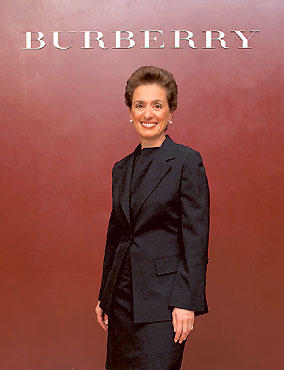
In 1997, Burberry appointed Saks Fifth Avenue executive Rose Marie Bravo to rejuvenate the brand.
Bravo took control of a brand image that was stale. Burberry had a predominantly male customer base. Furthermore, the GUS group was reliant on licensees over whom it had little control and distribution was haphazard. In central London Burberry was sold in more than 60 stores, but the luxury brand was absent in Selfridges, Harvey Nichols or Harrods.
Within weeks of arriving at Burberry, Bravo had signed up Mario Testino, one of the world's most celebrated fashion photographers, and the blue-blooded model Stella Tennant for an image-changing shoot. However, Bravo had one small problem: she had no new clothes to drape over the willowy Tennant. The appointment of Italian designer Robert Menchetti to the division solved this problem. Since then, three distinct ranges have been created: Prorsum, an international high fashion collection; Burberry London, the core collection that accounts for 85 per cent of worldwide clothing sales; and Thomas Burberry, a younger, more casual collection, which was launched in London in 2005.
By the end of 1998, Burberry and its latest ranges were being lauded by the fashion press, Burberry had found its niche between some of the broadly distributed apparel companies and the pure luxury brands, with the brand being British brand as an unexpected plus.
Bravo’s transformation of Burberry's image has been remarkable, including the opening of landmark stores in Milan, New York, Knightsbridge, Barcelona and Beijing.
Bravo also restructured the business side. Burberry regained control of vital markets such as Spain, Japan and Asia, by renegotiating and buying back licenses.
By focusing on high fashion and a media blitz, Burberry renewed its brand's prominence.
It resulted in a spectacular revival of the brand. In 2000 the likes of footballer David Beckham, it-girl Tamara Beckwith and ex-Spice Girl Victoria Adams Beckham made the brand even more fashionable.
Bravo also tried new colors in the traditional beige plaid and put the pattern on everything from bikinis to shoes.
As a result, Burberry's trademark check became over-exposed. In Britain, Burberry lost its cool after being adopted as the uniform of the suburban yob. (Yob refers to lager louts, soccer hooligans, or anyone guilty of drunken behavior resulting in racist and sexist remarks, rampaging through the streets and roughing people up.)

Since Bravo’s contract expires in July 2005, Burberry decided to appoint Angela Ahrendts as Bravo's replacement.
Ahrendts joined Burberry from Liz Claiborne Inc., one of the leading apparel companies in the US, where she was responsible for women’s wear and men’s wear brands including Ellen Tracy, Juicy Couture, DKNY Jeans and Lucky Brand.

Will Ahrendts be able to rebuild Burberry as a niche and exclusive brand in a mass market? Will she be able to maintain the profit level that Bravo set?
Bravo wove her magic combining product diversification, cross-marketing and media blitz.
It will be interesting to see how Ahrendts will try to make both customers and stock holders happy.

Thursday, October 13, 2005

Do lawyers need marketing and PR?

Few legal firms believe in marketing and PR. This might cost them dearly in the long run for several reasons.
  1. The market has changed. As long as there are people, there will be conflicts and lawyers will be able to make a living. However, clients are becoming more and more savvy – Internet and blogs make juridical information available to everyone.
    A lawyer has to realize that his/her potential clients will be critical and want to keep posted each step of the way.

  2. Having a sterling reputation is not enough. Many lawyers still think that clients will come to them. Being well known and having a wonderful record of accomplishment will not have a pull effect. Law firms must actively seek out and search for clients. Just waiting for the knock on the door will not do it.

  3. Websites are necessary. Many law firms still have no website at all or minimal one that isn’t being updated. They still assume that having a contact page will suffice. Law firms must invest in professional websites that reflect the capabilities and track record of the law firm.

  4. Lawyers still think that they provide first and foremost professional services and ignore the client’s demand for full and upfront disclosure of pricing, procedures and risks.

  5. Law firms must realize that they are selling a product: namely themselves. Lawyers must therefore market themselves to the public.

  6. Competition. Many well-established law firms ignore market research on competitors. This might cost them dearly in the long run.

  7. Branding. Law firms are notorious for ignoring branding. They are reputation-focused, building on publications and won cases. All professionals are only as good at their last success and maintaining a flawless rack record in law is almost impossible due to the many outside factors that can influence a case or procedure. Lawyers should therefore be brand-conscious and build and nurture their brand.
What are the lessons that marketing can teach lawyers?
  1. Market research: identify potential clients, to keep abreast of changes in culture and trends that could influence legislation, to analyze the competition.
  2. SWOT analysis: identify strengths, weaknesses, opportunities and threats
  3. Positioning: position the law firm in the market, communicating its expertise, track record and price structure.
  4. Branding: trade name, logo, website, corporate colors etc.
  5. Promotion: newsletters, updates, sponsoring, adopting a cause
  6. Public relations: communicate with the public, with clients, with industry players.
  7. Media: trade magazines, local newspapers/radio/TV, national media and (depending on the expertise) international media.

Monday, September 26, 2005

A Rolling Stone doesn’t gather Moss…

Supermodels and fashion icons have a solid reputation, meaning that it takes a lot for them to fall from grace.
Naomi Campbell, the trouble child of Haute Couture, has been at the top of her professional for 15 years, notwithstanding violent tantrums and court orders to go into anger management.
Sex, drugs and rock & roll has been an integral part of the high fashion lifestyle – diet pills addiction, cocaine use, alcohol accesses - you name it.

But in the case of Kate Moss, there is a limit to the damage a brand can take.
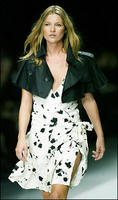
Naomi is sensitive about her brand and knows how to perform damage control.
Her latest fashion extravaganza for the victims of Katrina is a perfect example.

Kate has been a wild party child since the beginning of her career; even rehab and motherhood couldn’t tame her.
Kate’s freefall began after photos appeared in British tabloids showing her using drugs.
This was obviously too much “in your face” for the general public.
The fact that Scotland Yard is investigating the claims she has taken cocaine in public didn’t help as well. The newspapers worldwide had a field day reporting on Kate’s past and present peccadilloes, dubbing her “Cocaine Kate,” and using tacky headliners such as “high as a Kate.”
When more revelations were made public claiming Moss indulged in cocaine-fuelled lesbian three-in-a-bed sex, the invisible line between eccentric and unacceptable was crossed.

A supermodel doesn’t make her living from just trotting the catwalk and pouting for the cameras – she is a small business empire, raking in revenues from lucrative sponsorships. Moss’ annual income is estimated at ₤7 M. ($ 15.4M.)
And that’s where the crux is – to be the “face” of a strong brand like Chanel, Burberry or H&M, the model’s brand must be in sync with the corporate ones.
Quite a few companies put a “healthy and clean living” clause in their contracts with models and spokespersons to ensure that.

Once the media thoroughly trashed Kate’s reputation, several of her employers did some rethinking – afraid of “guilty by association”. The first to sever ties with Ms. Moss was the fashion label H&M, whose major customer groups are female teenagers and young women.
They cited that Moss’ behavior was “inconsistent with H&M’s clear dissociation of drugs.”
For a public company, that actively supports the drug-preventing organization Mentor Foundation, it was the only sensible thing to do.

Soon afterwards, Chanel revealed it would not be renewing her contract as the face of Coco Mademoiselle perfume, citing: “Chanel currently has an advertising campaign with Kate Moss that is due to finish at the end of October. The company has no plans to work with Kate Moss on advertising campaigns in the near future.”

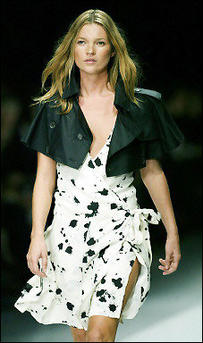
A few hours after the Chanel statement, iconic brand Burberry announced that it would be "inappropriate to go ahead" with the contract in the light of the allegations. Burberry had intended to use Kate in a forthcoming publicity drive. The company sugared the bitter bill by adding that “Kate has always been a fantastic model and highly professional for Burberry,” neatly leaving the door open for future return and closed for lawsuits.

The Gloria Vanderbilt label dropped Moss stating, "We would have second thoughts about using her. We weren't aware of any issues prior to campaign.”
Fashion house Christian Dior and jeweller H. Stern followed suit.
At this moment, only cosmetic firms Rimmel and Coty, and jeweller Fred Paris haven’t taken a public stance yet.

Can Kate forge a comeback? It depends.
Moss’ problem is multifold. Her reputation is damaged by her association with lover Pete Doherty, a musician and heroin user. The public sees him as the evil genius behind her downfall. Dumping him and taking some time off to concentrate on her mother role would nicely cleanup her image.
She needs to rebuild her professional image as well – together with her personal publicist and the PR department of her model agency Storm.

Making a public display of denouncing drugs combined with some volunteer work wouldn’t hurt as well.
She made a first step in this direction by publicly apologizing for her drug use and stating:
“I take full responsibility for my actions. I also accept that there are various personal issues I need to address and have started taking the difficult, yet necessary, steps to resolve them.
I want to apologize to all of the people I have let down because of my behavior, which has reflected badly on my family, friends, co-workers, business associates and others.”

There are two more factors beyond her control that might work against her:
her age (31 is not young in her line of work) and her body type.
She broke into the fashion scene by embodying the “waif” look (or heroin addict look, depending on your point of view).
Once this look is considered passé, no matter how hard she will try, she will not be able to resume her career.
In the mean time, her PR people have cut their work out for them.


Wednesday, September 21, 2005

PETA’s PR – dynamite or disaster?

During the fashion weeks in New York and London, PETA (People For The Ethical Treatment of Animals) performed its usual and predictable PR stunt: jumping on runways to protest the use of real fur in fashion and PR. The fashion shows went on smoothly – generating free media exposure for unknown designers such as Julien Macdonald.

Interesting enough, PETA’s PR has two sides: a positive and a dark one.
PETA has been able to create brilliant campaigns such as the “think ink, not mink” ad with Dennis Rodman and also snagging many a celebrity to publicly promote PETA’s cause. It made PETA a household name worldwide.

On the dark side, PETA's "Holocaust on Your Plate" campaign asserts that the eating of meat is the equivalent of the torture and slaughter of Jews by the Nazis. PETA juxtaposes photographs of emaciated concentration camp inmates in their tight-packed wooden bunks with chickens being kept in cages. In a despicable comparison, a photo of piled bodies of Holocaust victims is juxtaposed with one showing bodies of dead pigs. Considering the Jewish dietary laws, this can only be seen as a PR gaffe of the first order.

Moreover, PETA is also not against promoting violence: it provided funds to convicted animal rights terrorists, including $42,000 to Rodney Coronado (he was convicted of setting fire to a research lab at Michigan State). PETA also admits paying $1,500 to the Environmental Liberation Front, which (according to the FBI) is one of the nation's largest terrorist groups.

Who is the PR guru behind PETA? PETA's director of vegan outreach Mr. Bruce Friedrich, who readily admits that he has no PR background whatsoever. In a recent interview, he stated the following.
Although I didn't have any formal training in PR and hadn't been doing animal advocacy professionally, I still had honed what I considered to be the strongest argument," he says.
"I also do have a background in advocacy, and I had been on my own advocating vegetarianism and veganism, and speaking in churches for almost 10 years.”

Friedrich and PETA share a strong belief that that their position is right, and will ultimately prevail.
Friedrich’s beliefs are based in religion. A devout Catholic, he says he believes that cruelty to animals is against his faith and justifies violence.
I think it would be a great thing if, you know, all of these fast-food outlets and these slaughterhouses and these laboratories and the banks that fund them exploded tomorrow. I think it's perfectly appropriate for people to take bricks and toss them through the windows, and you know, everything else along the line. Hallelujah to the people who are willing to do it.”

PETA’s zigzag PR strategy took an interesting turn on 9/16.
PETA supporter Heather Mills-McCartney paid a visit to the headquarters of Jennifer Lopez’ Sweetface fashion label to protest against the use of fur in some of its designs. Heather left wincing in pain after her prosthetic leg became detached during a clash with security guards at Jennifer Lopez’ New York office.
Representatives from PETA strangely enough went out of their way to stress that Heather visited the premises of her own volition.
“Heather Mills-McCartney took it upon herself to go to the Sweetface offices yesterday,” confirmed a spokesman. “J Lo said in a recent interview, 'If somebody wants to educate me about fur they can do'. Heather wanted to be the person to do that.” One would expect PETA to be sympathetic toward a faithful champion that got injured in the line of protest.
From a PR standpoint, if PETA doesn’t clean up its act soon, they will never achieve what they aspire to: influencing the public opinion to become vegetarians.
What should they do? First and foremost, PETA should hire a PR professional with an impartial view of PETA’s mission. The next step is rebranding PETA as a caring and non-violent organization, followed by building and implementing a consistent PR strategy.

PETA knows how to create headlines, but sadly missed out on a golden PR opportunity – rescuing the pets in New Orleans.

Tuesday, September 13, 2005

How SOX impacts marketing

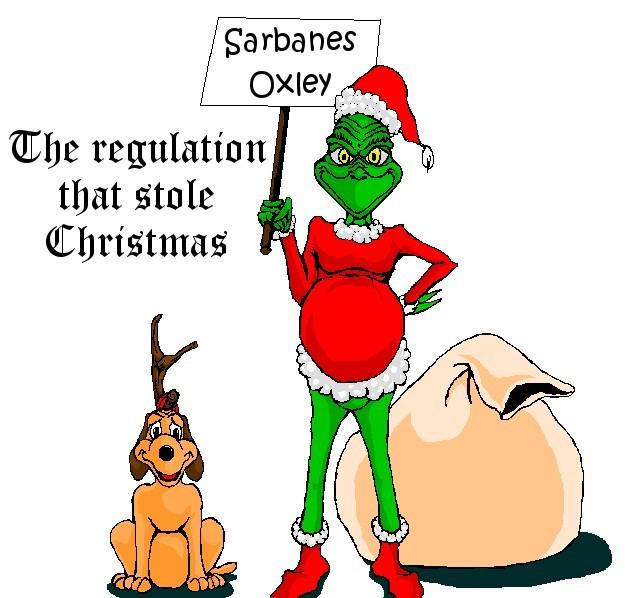
For sure you have heard about post-Enron legislation such as the Sarbanes-Oxley Act (SOX) that regulate the accountability for corporate compliance and risk.
Until recently, it made the upper echelons of a company or organization accountable.
However, it is now making its way to the marketing department so marketing professionals must be prepared.

Marketing takes a sizeable chuck out of a company’s budget for marketing and PR activities that have an enormous impact on customers and shareholders alike.
It makes sense that Sarbanes-Oxley forces every marketing executive to ensure that the processes that they are responsible for have security, integrity and financial accountability.

Nearly every department and/or function within a company or organization is subject to a severe Sarbanes-Oxley audit.
Until recently, marketing has remained fairly unaffected, resulting in highly inaccurate financial reporting by most corporations.
But marketing departments are now also forced to become financially accountable.
This makes sense: the marketing communication budget is often quite substantial - with corporate management being responsible for the procedures for financial reporting.
Therefore, accurate and quantitative measurement of the marketing performance is required. To improve SOX compliance, a CEO or VP Marketing will demand that marketers use a chosen technology that forces marketing to tightly integrate with the company’s financial reporting.

How does SOX impact marketing and PR performance?
From "SOX on", marketers will play an instrumental role in the corporate compliance of the company.

Internal communications between marketing and the rest of the company or organization will improve, thus avoiding severe compliance risks, legal implications, and monetary risks.

The risk of erroneous representation will be reduced. This is important for those companies where marketing interacts with many different departments, such as R&D and Testing. Misrepresentation of a product or the company itself both internally and towards the public and press, can have severe repercussions. It can lead to brand and image damage - with financial and/or legal consequences.

Most importantly, it will put a stop to significant ad-hoc, unplanned operating expenses – no matter how justified.
These expenses are normally not accrued accurately, resulting in an error margin up to 10% in corporate profit & loss statements. Adequate financial reporting by the marketing staff will solve this problem.

For now, marketing and PR professionals might feel that they have to act "like accountants" and that their creativity will suffer, but in the long run the whole marketing discipline will benefit ensuring a high level of professionalism.

Monday, September 05, 2005

Going global with a corporate website

The majority of corporate websites are in English only, regardless of the location of the company. But what to do when the company wants to go global? Is an English website with a list of local contacts enough? And who will lead the complicated process of making the website and “face” of the company international?
The international marketing and PR professional is the one to handle this issue in a company.
There are several tough questions to ask and answer before even touching the website.

Does the company want to be global?
The answer is not as clear-cut as it seems. Companies are proud of their roots, and it’s a challenge for every international marketing and PR professional to implement “think global, act local”. It must be reflected in the website – the (potential) customers must get the feeling that they are joining or are part of an international family.

Where are the company’s (potential) customers located?
Especially Spanish, Italian, and French speakers don’t like to wrestle with English. They prefer their native-language version of the website. The same applies to a lesser extent to German and Portuguese speakers. Russian is the preferred language for most Central and Eastern European customers. Depending on the country, many African customers are fluent in French or Portuguese, but not in English. So how does one handle a multi-lingual website?

There are two options:
a) a full mirror site in the local language or
b) one to five pages containing condensed information about the company and its products in the local language (including contact information to reach the local representative).

What is the culture of the target audience?
This question is crucial - not only for the design of the website (colors, images) but also content wise (industry standards, features). Local case studies and success stories are a must; the “one-size-fits-all” concept doesn’t work.

Are sales generated through the website?
If this is the case, the website must allow the purchase of products from anywhere, at anytime. Online payment should be made easy – with instructions in the local language. Payment means such as locally issued credit cards must be accepted – too many (US) companies only accept credit cards issued by a US financial institution. Prices should be in the local currency or in US$ with an online exchange rate calculator.

Can the local markets be supported around the clock?
Support is crucial to keep customers. In case of online shopping, the helpdesk has to consist of native speakers. They should be reached by dialing a toll free local number.
In general, any company selling abroad must have local representatives or personnel for service and support if they want to build and maintain a lasting presence in that market.

How does the company show up in search engines?
At this moment, Google and Yahoo are still the main search engines.
Ranking depends on the location of the potential customer. Google.com shows a different ranking in the USA than in France, for example. Google and Yahoo also have local language versions that are often used as the default int that country. The local Google and Yahoo sites support several search modes: in the local language (only German text will show up), in the local country only (all pages in any language in Germany) and in English only (searches the web – results differ dramatically from country to country, since local preferences are embedded in the search tools).
Needless to say, in order to show up in local searches, having a local language website (or at least some website pages) is of paramount importance.

Does the company produce white papers or scientific documents?
In high-tech companies, it is not unusual for the CTO to address scientific forums and lecture at universities. These documents are a great tool to build confidence in the company’s technology. The best way of distribution to an international audience is by easy download (protected pdf) from the company’s website. English is the general scientific language, but the abstract should be in the local language for maximum impact.

Monday, August 29, 2005

Feng Shui and PR materials

New trends are the life force of public relations.
As marketing and PR professionals, we must be aware and study new trends in society- especially in the fields of wellness, lifestyle, fashion and design.
Even if it’s only a fad, managers, customers, journalists, target groups and the general public might embrace it - and longer than foreseen.
PR and corporate materials (websites, newsletters, brochures) must be contemporary to appeal to the target audience and reflect their feelings and tastes.

One of the trends to watch is feng shui.
Feng shui (pronounced fung shway) is the ancient Chinese system of arranging environments to maximize their internal harmony and the happiness of the people who use them.
It reached the West in the '90s, when trendy Westerners sought to apply its principles to their own homes and offices. Donald Trump is a recent fan.
It changed interior designs and launched many “how to” books, mirrors, ornaments and indoor fountains.

So how does it apply to corporate and PR materials?

Principle
The most important aspect of feng shui is ch'i - the life force that flows in and around everything, binding it together. Ch'i is the energy that must be able to flow well in order to create a positive environment - good feng shui.
Feng shui in PR materials translates into easy to navigate websites, easy to read newsletters and other corporate materials – the text, images and content must “flow”.

Colors
A bright and clean design brings good feng shui. The website or document must have bold colors, especially blue, which goes down well in all cultures (in feng shui, it represents water). Graphics should be clean and a pleasure for the eye. It should transmit the message without too much effort. To ensure this, don’t put too much text in diagrams and make details big enough to be seen effortless in all formats, including low resolutions jpegs and gifs.

Life and movement

In feng shui, life and movement are used to fill in stagnant areas or break up long, straight lines. In interior design it translates into putting plants in the corners of rooms, or fish tanks against boring walls.
In websites and corporate materials, it translates into creating a balanced design or document, by making sure that that great graphics fill empty spaces.
The graphics can be a company specific images (a product, building) or can be a general images (fields, river, beach, child at play, smiling people) to give the reader a “good feeling”.
In corporate websites, certain "wellness images" are repeated at the same location on each webpage, thus creating the flow that's so important in feng shui.

Simplicity
We all heard the term: “less is more”.
Especially when designing a website, make sure that you don’t put in too many multimedia gimmicks. People visit corporate websites to get information, not to be entertained. When using flash on the homepage, put in a “skip intro” function.

Straight lines
Nature consists of round forms – leaves, shells, and trees, including the human body.
Websites and documents are linear by nature. For good feng shui, you need curvy, flowing lines. On web pages, this can be achieved by making tabs round (not angular) or designing round buttons to click on. For good feng shui, there must be curvy design elements throughout the whole website and other corporate materials.

Navigation
Whether it’s a document, brochure or a website, the user must find it easy to read it or intuitive how to navigate in case of a website. The document must be so appealing that the reader will pick it up again. In case of websites, the visitor must be enticed to revisit the site.

After reading the above, readers of this blog might come to the concluding: ”so what, I have been doing that all along”. In that case, good for you and keep up the good work.
However, feng shui is not a new design craze; it’s a more than 5,000 years old discipline that makes us all look at our environment and PR materials from a different angle.
Even if you, as a marketing and PR expert, are tempted to reject it as another passing fashion, be aware that a substantial part of your target audience knows about it, with a growing number embracing it.

Wednesday, August 24, 2005

Death by Review

All marketing and PR professionals have faced the same problem at some time in their careers: death by review.
The professional produces the desired material on time for review. And that’s when the fun starts. Due to almost endless review and approval loops, the signing off on the produced document or design is often beyond the deadline.
Apart from frustrating, long and complicated approval circles also comprise the quality. Remember the quotation: “a camel is an animal put together by a committee”? That’s often the end result.
So how to avoid this pitfall?
The following seven steps may help.

1) Do your research. Make yourself an expert by not only knowing exactly what the ideas, concepts and procedures within the company are, but also what has been done by the competitors. Check market and industry trends as well.

2) Define the project and process in detail. Put in deadlines of the deliverables, as well as the consequences when deadlines are not met.

3) Try to limit the review committee to 3 people (for internal marketing/PR) and only one project manager (for external agencies).

4) When planning the project, make a detailed timeline with some buffer for unforeseen events.

5) Limit the amount of drafts to be reviewed. Avoid “creeping elegance” – the tendency to try and improve the content by making changes again and again.

6) If possible, use templates (such as press releases, newsletters) or other materials (e.g. colors, fonts, icons, images when creating new brochures or posters) that were already approved by the company before.

7) Try to backup the content of the document or design with trends, customers’ reactions or competitors’ material. It makes the acceptance by the company a lot easier. This relates to the first item: research

Depending on the company or organization, it might be impossible to implement a smooth review procedure. In that case, there is only one thing to be done: grin and bear and make sure the blame is not on you.

Tuesday, August 16, 2005

Emotional Marketing – the Starbucks example

Starbucks is one of the strongest global brands around – without following the marketing text book.
Its complicated logo is not memorable, and most people will not be able to recreate it if you ask them to. They will describe it as “something green” “roundish” with a “person or something” in the middle. The slogan is not memorable either, and before you rack your brains, Starbucks doesn’t have one.
The packaging and collateral are nothing special and I challenge you to find an advertisement in any magazine. Starbucks does advertise, but uses emails as the preferred medium.
So what is the success factor of the Starbucks brand? The emotional experience of its consumers – they feel sophisticated and part of what many brand experts refer to as a "coffee house" community.
For the Starbucks community, coffee is not just a beverage, but it is a ritual, a habit, a treat, and a satisfying reward all rolled in one.
That’s the reason why Starbucks’ cup sizes are "grande" and "venti," not medium or large. Each cup of coffee is also freshly made by a "barista" at a separate counter and never behind a wall or out of sight from the customer. The Starbucks store has tables and chairs for congregating or reading and working. , and many have plush sofas and armchairs. Many Starbucks also have Internet connection for their customers’ convenience.
The Starbucks success formula works well around the world.
They only failed in one market: Israel.
Starbucks entered the Israeli market with a local partner (Delek). The emotional marketing concept of Starbucks failed. Israel has a strong coffee culture for more than 50 years. Therefore, the coffee market is saturated with strong and successful chains (Arcaffe, Kapulski, Coffeebean & Tealeaf) that serve a wide range of gourmet coffees. Starbuck’s French roast is not a favorite.
Starbucks was unable to distinguish itself from its competitors, except for its higher prices. In 2003, Starbucks decided to close its 6 outlets.

Wednesday, August 10, 2005

Writing a product press release

It all starts with technology companies introducing a new product to the market.
To create awareness for the product, the marketing/PR professional must draft an appealing press release or announcement. This is easier said than done.
It normally follows the following format:
1) Product name (bolded and repeated several times throughout
the text)
2) Company name (if possible, with ticker and tagline)
3) Application (explaining the use)
4) Benefits (set against existing products/solutions in the market)
5) Availability (retail, distributors, countries)
6) Potential (expected deployments)

The problem – they all look alike.
The example at the bottom of this blog has been written by an unidentified author. It gets the point across splendidly.
The writer is not only a great wit – s/he is also teaching each marketing and communications professional a valuable lesson: the way the information is presented here will not make anyone run to the stores and purchase a BOOK.
So how can we make a reader sit up and take notice?
  1. Avoid long winding headings. Make your headline short, to the point and interesting. In the example below, the headline could read: Want to feast your eyes? Get a BOOK! It will increase the chance that a reader will be curious and read on.
  2. sentences make people loose interest and also give them the feeling that the company might be “hiding” something.
  3. Don’t go into too much details how it works – your audience is not a member of your R&D team. Write the product application for a complete outsider without any technical knowledge. Describe is clear, short sentences what’s about; long and complicatedTry to put some wit in the release. When using humor, make sure that it also swings in other cultures and languages. A notorious example was the perfume “Morning Mist that leaves you refreshed”. They used the same slogan in the German market. Since Mist in German has a different meaning (manure), it ruined any chance ever to enter that market successfully.
  4. Tab into the wants and needs of your potential customers, and explain how the product can ease their pain or make their life easier.
  5. Give clear information about availability: time, location and purchase wise.
  6. Avoid acronyms, abbreviations and buzz words.
  7. When addressing an international audience, pay attention to language, content and style. Avoid American expressions such as “ramping up” and British expressions such as “whilst”. Mentioning of dates and times are also tricky: 8/9 US = 9/8 Europe; 2pm US = 14.00hrs. Europe.
  8. Make sure that the original text lends itself for multiple translations. When using similes, make sure they are understood in different countries and cultures.
Introducing: The new Bio-Optic Organized Knowledge device, trade-named -- BOOK. BOOK is a revolutionary breakthrough in technology: no wires, no electric circuits, no batteries, nothing to be connected or switched on. It's so easy to use, even a child can operate it. Compact and portable, it can be used anywhere -- even sitting in an armchair by the fire -- yet it is powerful enough to hold as much information as a CD-ROM disc. Here's how it works: BOOK is constructed of sequentially numbered sheets of paper (recyclable), each capable of holding thousands of bits of information. The pages are locked together with a custom-fit device called a binder, which keeps the sheets in their correct sequence. Opaque Paper Technology (OPT) allows manufacturers to use both sides of the sheet, doubling the information density and cutting costs. Experts are divided on the prospects for further increases in information density; for now, BOOKS with more information simply use more pages. Each sheet is scanned optically, registering information directly into your brain. A flick of the finger takes you to the next sheet. BOOK may be taken up at any time and used merely by opening it. BOOK never crashes or requires rebooting, though, like other devices, it can become damaged if coffee is spilled on it and it becomes unusable if dropped too many times on a hard surface. The "browse" feature allows you to move instantly to any sheet, and move forward or backward as you wish. Many come with an "index" feature, which pin-points the exact location of any selected information for instant retrieval. An optional "BOOKmark" accessory allows you to open BOOK to the exact place you left it in a previous session -- even if the BOOK has been closed. BOOKmarks fit universal design standards; thus, a single BOOKmark can be used in BOOKs by various manufacturers. Conversely, numerous BOOKmarkers can be used in a single BOOK if the user wants to store numerous views at once. The number is limited only by the number of pages in the BOOK. You can also make personal notes next to BOOK text entries with optional programming tools, Portable Erasable Nib Cryptic Intercommunication Language Styli (PENCILS). The media is ideal for long-term archive use; several field trials have proven that the media will still be readable in several centuries, and because of its simple user interface it will be compatible with future reading devices. Portable, durable, and affordable, BOOK is being hailed as a precursor of a new entertainment wave. BOOK's appeal seems so certain that thousands of content creators have committed to the platform and investors are reportedly flocking to invest. Look for a flood of new titles soon.

Tuesday, August 02, 2005

Marketing Harry Potter

No fictional character has been marketing so quickly and so well as Harry Potter.
From the start, Ms. Rowling made sure that she kept a firm grip on her brainchild. In order to make the books appeal to boys (and not be perceived as chick lit), she chose the “masculine” version JK Rowling.
Her main goal is to please her fans. She copied the marketing strategy made popular by politicians and movies stars: give exclusive interviews to carefully selected magazines and newspapers and focus on appearances for fans and readers in benign, controllable settings. She knows that the best sales people are zealous fans.
She is very protective of the Harry Potter brand and makes sure that nothing will delude it. She banned publication of ebooks, which considering the lacking performance of children books in electronic form, is a wise decision.
When she launched "Harry Potter and the Half-Blood Prince", Rowling avoided press interviews and opted for a contests and competitions. Her UK publisher sponsored the largest contest; her American publisher ran its own version, dubbed "Why I Love Reading Harry Potter."
Newspapers in Britain, Ireland, South Africa, Australia, New Zealand and Canada were used as vehicles to run competitions.
At midnight on the 16th of July 2005, the biggest book launch (of “Harry Potter and the Half-Blood Prince”) in the history of the written word took place. The concept behind it was, that readers all over the world would buy (and read) the book at the same time, thus cleverly preventing story leaks and bootleg copies. Rowling cleverly whetted the appetite of her readers by hinting at “a death” and promising that “a lot would be made clear”.
Despite all logistic precautions, there was an accidental leak of the latest Potter book in a suburban Vancouver store. The local distributor immediately obtained a Supreme Court injunction, preventing anyone who received a copy from disclosing or copying information about the book. Since this news snippet was all over the media, Harry Potter got a lot of free and effective international PR out of it.
The seventh and last tome in the Harry Potter series will be the grand finale of Rowling’s magical streak. It will be interesting to see how she will maintain and sustain the Harry Potter brand and how she will continue to market the books after the series is finished.

Monday, July 25, 2005

Person(al) marketing - learning from Madonna

People are brands. Just like companies and organizations. Without realizing it, we are constantly marketing ourselves to the outside world from a very early age.
We need this skill – we are per definition herd animals and need to position ourselves in order to survive. Some people excel in personal marketing. What distinguishes them from others? Answer: they perceive themselves as a one-person empire and act accordingly implementing classic marketing tools. How do they do it?

Let’s look at Madonna (the artist).

Madonna decided two decades ago that she wanted to be a famous entertainer.
She analyzed her strengths (dancing, trend setting); her weaknesses (singing voice, no start up capital); opportunities (club circuits, people that where willing to help her/give her a shot); threats (many competitors, not well connected).
She formulated her unique selling point as catchy boogie tunes combined with an energetic dance performance. She identified her target audience as trend setting clubbers, DJs and talent scouts. She launched her “Madonna” brand in trendy NY clubs, making sure the routine was fresh and cutting edge.
She focused on playing many gigs and working the club scene, building her presence, name recognition and network. It resulted in a contract with Warner Bros. with the hit “Like a Virgin”.

For the last 20 years, Madonna has cleverly redefined her product to ever-changing tastes of a fickle audience in both music and presentation (packaging).
Over the years, the product Madonna changed from rude to prude – currently being the spiritual, talented wife-and-mother who embraces the Kabbalah.

Each product has by nature a limited life span. Madonna handled this by creating a clever product mix of music, books and merchandise.
She leverages her motherhood by successfully launching five children’s books with a sixth one in the pipeline. A side effect is getting the Madonna brand across to the next generation of CD and music files buyers. her brand is so strong, that even the news that her books might have been written by a ghostwriter, didn't impact the sales.
In January 2006, her next album “Defying Gravity” is scheduled to be released which will coincide with the launch of her perfume. The perfume deal alone has a reported value of $ 9.5M.
Overall, her ROI is threefold: the obvious monetary rewards that she reaped over the years (net worth in 2005 > $ 350M); the status of “Queen of Pop”, firmly placing her at the pinnacle of her industry; the label “icon” which ensures her eternal presence in the chronicles of the global music and entertainment history.
http://www.forbes.com/lists/2005/53/KMJ4.html

Few of us will ever reach the level of success that Madonna enjoys. But each one of us can learn from her – by following her example and marketing ourselves.

Monday, July 18, 2005

Marketing Monaco

Monaco is a Mediterranean country the size of Central Park, surrounded by France on three sides. It has been independent for 700 years, not taken the short occupation by Napoleon into account. In 1297, the buccaneer Francois Grimaldi seized the fortress of Monaco from Genoa, by posing as a monk.
In 1863, the Grimaldis founded the Societe des Bains de Mer, which built and runs the country’s Spa and Casinos. For the next 80 years, the country has a reputation of being a sunny place for shady people.
When prince Rainier came into power, he implemented a clever marketing plan to make Monaco prosperous.
He rebranded the country from unsavory to glamorous through his marriage to the beautiful
and rich movie star Grace Kelly from then on known as Princess Gracia.
The wedding itself (sponsored by MGM which paid for the wedding dress) was a PR success – 30 million viewers worldwide.

The entertainment segment was created with the establishment of several annual festivals, tournaments and events, such as the Monte Carlo Television Festival, tennis tournament, Formula 1 Grand Prix, Red Cross ball, Rose Ball and the Circus Festival.

The Societe des Bains de Mer was reshaped and currently owns and operates four casinos, four luxury hotels, twenty restaurants and nightclubs, a health spa, a conference center and a golf course.

The tax haven segment is the result of the transformation of Monaco in a fiscal paradise by liberalizing of the principality’s taxation, corporation & banking laws resulting in no tax on income, capital, investment transfers or share transactions.
Out of the 32,000 inhabitants, only 6,000 are Monegasques; the rest hails from 122 countries, most predominantly from France and Italy.
Especially France is not too happy about this – calling the Disney-like country a lure for money-laundry and white color crime. For the non-Monegasque residents, the country not only ensures that they don’t have to pay taxes in their home country, but it also guarantees absolute safety due to a network of surveillance cameras.

The real estate segment is the result of Rainier’s relentless and successful efforts to reclaim land from the sea. He expanded Monaco’s area by one fifth and allowed the building of high-rises obtaining the nickname “the building prince” in the process.

By shrewd marketing, Rainier was able to turn a country on the brick of bankruptcy into one of the richest in the world. Due to the colorful antics of its female royalty and its tax exiles, Monaco hasn’t been successful in shaking off its kitschy and slightly tacky image.
The new ruler is very much aware of this – he announced that he wants to make
It is will be interesting to see how Rainier’s successor will market the country in the near future and coming years.
He announced that he wants to clean up Monaco’s image, shaking its shady and operetta-like reputation. He wants to be a modern and dynamic leader of a respected country.
Unfortunately, he started his reign by announcing having a child out of wedlock just before his official inauguration, followed by hinting that more announcements of this kind might follow.
Time will tell if this was a savvy move on his part or just another colorful episode in the history of this scandal-prone principality.It will be interesting to watch how Albert will manage and market Monaco.

Tuesday, July 12, 2005

Is there such a thing as too much PR? Ask Tom Cruise

In order to promote their movies, actors seek the limelight – the more media coverage the better. The audience cannot get enough of the loves and lives of the famous, so the system works and leads to mutual satisfaction.
But something interesting is happening with the media coverage of Tom Cruise.
Tom is a well-established A-list actor who is perceived as a good actor in decent movies and liked for his humanitarian work. So far, so good. Mr. Cruise got married, adopted two children and divorced in what seemed to be an amicable way. It was known that Tom is a member of Scientology, but until recently it didn’t tarnish his all-American clean-cut image, so the Tom Cruise brand kept in tact.

In his notorious interview with Matt Lauer on the Tonight Show, high school dropout Tom Cruise attacked psychiatry (informing his host that he didn’t know what he was talking about) and lashed out at Princeton-educated Brooke Shields and author of the book “Down Came the Rain: A Mother’s Story of Depression and Recovery” for taking post partem anti-depressants. He went on advocating Scientology and vitamins as the cure.
Brooke Shields reacted with a well-crafted response in the New York Times stating: "if any good can come of Mr. Cruise's ridiculous rant, let's hope that it gives much-needed attention to a serious disease." It definitely increased her book sales, an effect for sure not intended by Tom Cruise. Politicians also took notice: New Jersey’s acting Governor Richard J. Codey reacted by ordering Cruise to stick to acting and stop upsetting sick women. There is even a boycott petition: http://www.petitiononline.com/
Scientology also reaped the results of the media exposure: their official web site shot up 263 percent to reach 375,000 visitors per day and Google listed Scientology as the 10th fastest gaining query for the week of June 27.

To promote his new movie “War of the Worlds”, Tom appeared on one of the best media outlets – Oprah. For somebody who has been in the business for decades and who is quite media savvy, his performance was disastrous. He sort of “attacked” Oprah three times, announced his engagement to Katie Holmes, who is young enough to be his daughter and dragged his fiancee forcefully on stage and jumped on the couch like a four-year old. It completely missed the mark of promoting his upcoming movie. The media reacted by labeling the engagement a PR stunt, especially since Katie is starring in the just released movie “Badman begins”. A People poll found that 62% believe the romance is a publicity stunt. A Star cover story asked: "Are they faking it?" and even The New York Times got in on the debate with a story headlined "I Love You With All My Hype."

At the London premiere of “War of the Worlds”, Tom was the victim of a prank show by being sprayed with water from a water pistol. Tom started a whole discourse with the prankster calling him a “jerk” and pressed charges against the four men involved in the prank. Especially the European media labeled Tom as too serious, humorless and over-reacting.

Tom’s image has been tarnished and his persona is being ridiculed; blogs discuss “TomKat” with relish. The Tom Cruise brand has suffered so much that it spawned satirical websites – the latest being http://www.tomcruiseisnuts.com/

So what happened? The reason is the change in Tom’s PR team. In the beginning of 2005, Tom fired his long-standing publicist, Pat Kingsley, and Tom’s sister Lee Anne De Vette now heads the new team. After his Oprah appearance, his publicists bombarded him and his sister with calls begging them to “tone it down”. His new team is also working overtime emphasizing that his relationship with Katie Holmes is “genuine” and will be sealed in a Scientology wedding.
From a PR perceptive, Tom Cruise needs to evaluate his situation carefully and had to decide on a course of action before his personal brand is so tarnished that his bottom line will suffer. The writing is already on the wall: although “War of the Worlds” is doing well at the box office, Cruise’s performance received a lukewarm reception. His planned performance in “Mission Impossible III” was cancelled when the project was postponed indefinitely. Fiancee Katie Holmes lost out on the main lead in the next Badman movie.
In contrast to popular opinion – there is such a thing as too much PR.

Wednesday, July 06, 2005

The VNR Dilemma

VNR stands for Video Network Release. It’s footage produced by a company or organization and sent out to be aired, just like press releases are sent out to be published.
Produced in broadcast news style, VNRs relay the news of a product launch, medical discovery, corporate merger, new strategies or markets directly to television news decision-makers. They decide if and how to use the video and audio material - in full or in edited form. Most major television stations in the world now use VNRs, some even on a regular basis.
So what is the problem?
These video clips are 1) indistinguishable from traditional news clips and 2) are sometimes screened unedited by television stations. If the original producers or sponsors – the companies and organizations that pay for production and distribution – are not identified, the viewer perceives it as a news item.
The problem started in April 2004 when the Department of Health and Human Services (HHS) put out a VNR praising the benefits of the new Medicare bill. The PR professional was featured as the spokesperson signing off with “In Washington, I’m (full name) reporting”.
This resulted in a spate of articles - The New York Times, , The Wall Street Journal, Adweek, PRWeek, Advertising Age, Broadcasting & Cable and other publications all addressed the issue of Video News Releases (VNRs), Satellite Media Tours (SMTs) and broadcast PR.
The FCC joined the debate. Its commissioner, Jonathan S. Adelstein, gave a speech warning against video news releases and so-called experts, from chefs to celebrities, who appear on news shows to endorse particular products without disclosing they are being paid by marketers for their efforts.
So how can a marketer or PR practitioner handle a VNR properly?
1) Treat it as a press release – make it truthful and to the point
2) Make sure you identify the sponsoring company or organization
3) Make sure you have legitimate and compelling spokespersons – an expert should be an expert!
4) Select a reliable and ethical VNR producer and distributor
5) Make sure that TV stations airing the VNR identify the source
6) Make sure that you include unique footage
7) Make sure you have your (local) facts and statistics in place