Thursday, February 09, 2006

Marketing Desperate Housewives – a tale of focus, strategy and luck


The show "Desperate Housewives" presented a complex marketing challenge to ABC.
Launching a new show is always a high-wire act - at least 50% of new shows typically fail within a year.
The show was facing stiff competition NBC's "Law & Order: Criminal Intent" and WB network’s "Jack & Bobby."

As with all new products, correct positioning was the first step to take.
Initially ABC started to sell the show as being dark and mysterious, since a suicide happens in the first five minutes.
However, they quickly realized that this positioning would not appeal to the target audience (housewives). It would not connect with the target audience.
Instead, ABC decided to focus on the name of the show and go from there.
After a market research, they decided to sell the show as a fun, sexy soap.

As a marketing strategy, it was decided not to spoon feed the audience, but keep details of the show secret.
If too many details were already shown, viewers might decide not to tune it at all.
The challenge was to put together clips that embodied the spirit of the show without spoiling the surprise.
For PR, ABC used the media planning agency OMD (part of the Omnicom Group) that created a promotion mix of the usual on-air and online mechanisms.
They also capitalized on the show’s tagline "Everybody has a little dirty laundry".

As a marketing gimmick, they put this tagline on the sides of laundry bags at various laundry mats and got greater buzz than the on-air and online ads.
About a million such bags were distributed (by Ambient Planet) in Los Angeles and New York.
Next to the slogan, the bags also bore photographs of four principal cast members of the series.
The marketing campaign also included (apart from the normal promotional spots) ads on billboards and buses and "screening parties" at health clubs.

The TV viewers embraced the show as a popular, twisted soap-comedy-drama-mystery.
Once it became a hit, merchandizing took off as well.
Apart from the ABC online store, entrepreneurs big and small are capitalizing on the new show's strong following.
TV-inspired garb was being snapped up such as T-shirts flaunting "I love Susan" to cherry red aprons saying "Honey, the marriage counseling might not work. You need to get used to bad cooking."
While sales numbers were not provided by ABC representatives, tvtee.com sold about 500 "Desperate Housewives"-inspired shirts in less than two months.
ABC did confirm that T-shirts were among the hottest-selling products during the show’s first Christmas season on the ABC.com store.

The show does some clever in-house marketing as well.
In one episode, one of the desperate housewives (Lynnette Scavo, played by Felicity Huffman) is trying to help her husband Tom (played by Doug Savant) by suggesting to improve his sales campaign for his client’s product "Spotless Scrub" aimed at women.
Her idea: advertise on dry-cleaning bags.

For the second season, the show boasted the slogan "New season, new dirty laundry."
ABC entertainment President Steven McPherson is a strong believer in marketing and wanted to optimize on the success of the multi-award-winning show that finished its first run as the fourth most watched program on television.
With their show ranking at the top of the Nielsens and up for a whopping 15 Emmy Awards, the stars of ABC's Desperate Housewives are also riding the merchansize wave - everything from soda pop to satellite radio.
Nicollette Sheridan and Marcia Cross hawk 7-Up Plus in a spot called "Shopping Showdown." Sheridan also endorses Di Modolo jewelry.
Eva Longoria, who appeared with Diddy in the "Truck" Super Bowl ad for Diet Pepsi, has new deals with L'Oréal and Sirius Satellite Radio.
Teri Hatcher, a veteran of Radio Shack spots, has recently appeared in ads for Variety, wearing nothing but a copy of the Hollywood trade paper.
The Desperate Men are equally in demand.
Ricardo Antonio Chavira and James Denton have been cast in a print campaign for the Susan G. Komen Breast Cancer Foundation sponsored by Lee Jeans.

Due to the show’s racy image, there are advertisers that steer away from it.
Mary Kay, Lowe's, Tyson Foods and Kellogg's pulled their ad dollars from "Desperate Housewives" after receiving negative reactions from their customer groups.
This didn’t greatly impact the show - Advertising Age reports that the asking price for a 30-second spot on Desperate Housewives jumped from an initial $150,000 to $300,000 once the show became a runaway hit.

What made "Desperate Housewives" a success in a market were half of the new shows fail within a year?

  • Market research – ABC did its homework and identified its target audience
    Positioning – the show was correctly positioned and received as a fun, sexy, soap-comedy-drama-mystery
  • Promotion – ABC created a perfect promotion mix
  • Branding – ABC build a strong show brand, using catching taglines
  • Marketing - ABC, the cast and the marketing company are marketing the show and themselves, including merchandizing

Wednesday, January 25, 2006

How to make a quick million using PR and creating pixel marketing in the process

All of us (with the exception of the well-heeled among us) could do with $1 Million, correct?
Many of us come up with concepts and ideas that unfortunately need (serious) funding.
All those great ideas are often shelved – it would just take too long, require too much time and money.
Once in a while, there is a bright person who comes up with a quick, low cost way of making a cool million - legally.
One of those persons is the enterprising British student Alex Tew.
He came up with the idea to create a homepage (www.milliondollarhomepage.com) and turn it into a billboard, made up of a million pixels.
He then divided the screen into 10,000 small squares of 100 pixels each, and sold them for $ 1 a pixel to anyone who wanted to put up their logo.
He was able to sell a few to family and friends for a total of $ 1,000, but not to anyone outside of his circle of acquaintances.

So how did your reach his target audience?
Since word of mouth would not generate more business, Tew sent a press release to national newspapers such as The Daily Telegraph, The Guardian, and The Sun.

Due to the unique angle (the most expensive website in the world) it was quickly picked up by the news media (Reuters, ABC, CNN) around the world.
It also spread around the Internet; many a blog mentioned the website as well.

As a result, advertisers for everything from dating sites, to casinos, to real estate agents, to The Times of London were putting up real cash for pixels, with links to their own sites.
Advertisers discovered that they were receiving actual valuable Web hits for a fraction of the cost of traditional Internet advertising.

One example is engineseeker.com, an Arizona-based company that helps clients’ websites to appear at the top of worldwide search engines.
They bought 6,400 pixels as soon as they heard about the Million Dollar Homepage.
As they put it:
“It was ingenious.
It’s easy to make money on the Internet, but it is very difficult to have a unique idea, and this one was.
We immediately knew that this website was going to attract huge numbers of visitors so we bought pixels there and then.
The results for us were amazing.
We used to get 40,000 visitors a day to our site — that’s now up to 60,000.”

By the end of 2005, Tew had sold 999,000 pixels and demand outstripped supply for the last thousand.
Giddy prospective buyers pushed him to open a second page, but Tew had pledged to close the page when his goal of one million dollars was reached in order to protect its originality.
Tew auctioned off the last 1,000 pixels on eBay for a whopping $160,109.09.
He donated part of it to The Prince's Trust, a U.K. charity for youth that once helped him.

What are the key success factors?

  • Originality
  • Clever marketing
  • PR
Tew also started a new trend: pixel marketing.
There are now charity sites; sites devoted to erotica; straightforward financial sites - all using pixels to raise funds.
While none of these seem to have replicated Tew's success -but the sheer volume of attempts and creativity behind it, takes pixel marketing seriously indeed.
Time will tell how it will catch on and we will know what works, and what doesn't.

Ironically enough, Tew did raise enough funds to finance his study (the reason he started the website in the first place) but since he has been bombarded with job offers and has been caught up in managing his site, he decided to drop out for now.

A classic example of victim of his own success?

Sunday, January 22, 2006

Marketing Birkenstock - from hippie to hipster

In 1971, Margot Fraser became the founder, CEO, and sole distributor of Birkenstock in the US.
Fraser used non-traditional marketing to sell Birkenstocks - she introduced the sandals to Berkeley CA, in 1966, where they were directed at the new generation, that perceived the sandals as “not affected by traditional thought.”
As a result, Birkenstocks have been associated with Woodstock participants, save-the-whale activists and tree huggers.

Over the years, Birkenstock relied on the general trend and demand for craftsmanship and renewable products to help promote their footwear.
For promotion, the company didn’t have any formal national advertisement and only also used unknown models.
Brandwise, Birkenstock was seen as “family-friendly, natural.”
As a result, their highest appeal was with the non-traditional consumers again.
This image was enforced by the “Birkenstock Green Team,” a US Birkenstock institution established in the sixties and consisting of a “small group of employees who meet voluntarily to monitor, research, and resolve environmental issues in (our) workplace, and to educate fellow employees about sound environmental practices.”

As a result, the general public saw Birkenstocks as ugly shoes for hippies, granola munchers, and environment activists.
In the late 1980s, Birkenstock got a boost from Generation X-ers and baby boomers that embraced casual wear.
In 2001 however, Birkenstock USA posted its second profitless year due to over $1 million in lost inventory and projected sales and costs for new computer equipment.
Birkenstock realized that it was time to reposition and rebrand.

It started its repositioning with producing and marketing more than 400 styles of clogs, dress shoes and other “closed-toe” footwear for men and women in colors and patent leather more suitable for fashion runways.
As Birkenstock USA CEO Matt Endriss phrased it:
“The challenge is getting beyond the hippie image. There's a huge opportunity to increase our position in the marketplace.”

Birkenstock needed to rebrand itself, and be perceived as a manufacturer of glove-leather, designer footwear.
The company’s strategy was to broaden its image to edgy and fashionable footwear that shoe-obsessed, ultra-cool Carrie Bradshaw might wear strolling down Madison Avenue in HBO's Sex and the City.
Birkenstock marketing strategy also included expanding its fledgling children’s market and its “professional” shoes aimed at surgeons, chefs and others who stand for long hours.
However, sales are driven largely by hype, celebrity endorsements and big marketing campaigns.
Companies such as Nike spend five times more on marketing and PR alone than Birkenstock sells in a year.

The repositioning of Birkenstock worldwide paid off.
In 2004, Birkenstock got a sudden boost worldwide with the fashion trend for colorful sandals.
European girls were gusting over glossy colorful sandalsand even French Vogue showed a pair of shimmering silver Birkenstocks in one of its issues.
The Japanese market closely followed – in the summer of 2005, Birkenstock successfully launched its footwear to the Japanese hipster crowd.
As a result, Birkenstock also acqured soem rich and famous American fans, including Gulf War general Norman Schwarzkopf and Oscar-winning actress Gwyneth Paltrow.

For celebrity endorsement, Birkenstock invited several celebrities, including Cindy Crawford, Robin Williams and Whoopie Goldberg, to mark the 30th anniversary of its bestselling Arizona sandal to design their very own version of it.
The company also signed actress/model Heidi Klum to both model Birkenstock sandals and to develop a limited-edition Birkenstock line.


It resulted in excellent media exposure, and branded Birkenstocks as hip and trendy.
To reach the profitable exercise and fitness market, Birkenstock engaged Tony Little, America’s exercise guru and informercial pioneer, to promote its exercise sandals.

Birkenstock also changed its advertising, including full page ads at the back of NY Times magazine.
In December 2005, Birkenstock selected Duncan/Shannon as its PR agency.

Where will small, privately-owned Birkenstock succeed in the long term?
One thing is for sure: Birkenstock made a promising start.

  1. It extended its brand into athletic shoes, hiking shoes and apparel, taking on companies such as Nike (which offsets sluggish sales of athletic shoes with casual crossovers and hybrid styles), bootmaker Merrell (which pioneered sport footwear such as moccasins), Timberland (which turned to sandals), competitor Teva, and designers such as Perry Ellis (who has his own footwear line).
  2. It expanded its distribution channels, adding ecommerce to its traditional stores.
    Birkenstock are now also available online.
  3. It repositioned itself and is now perceived as fashionable, not in the least due to its rebranding.
  4. Its extended its promotion to include celebrity endorsements that branded the company as fashionable and trendy. It also used celebrity endorsements to profile itself in the different target markets, including fitness. It also got favorable coverage in blogs and testimonials.
  5. It put emphases on marketing, resulting in a clear picture of who their customers are and why some of its markets are stronger than others.
  6. It identified fashion trends, which enabled it to enter new markets, such as Japan and children's wear.
  7. It was able to maintain its image as a quality product manufacturer and is endorsed by testimonials on websites and blogs.

The full case study is available in pdf format at www.debradejong.com/trends


Tuesday, January 17, 2006

Ford Motor is finding its marketing way

The Ford Company has always been more sales-driven than marketing-driven.
Ford’s legacy (the invention of the auto assembly line) has been overshadowed by its “creative marketing.”
If we look at its branding, Ford went through the following slogans: “No Boundaries” which lasted less than 2 years; “If You Haven't Driven a Ford Lately, Look Again” which lasted 2 years and the current “Built for the Road Ahead.”
Ford changes or tinkers with its ad slogan and brand strategy every 18 months or so, as executives change jobs in and out of finance, operations, sales, and marketing.
But that is not the only reason – to quote the newly appointed President Mark Fields: “advertising and even brand strategy at Ford has been viewed as somewhat disposable.”

This resulted in one of Ford’s main problems: customers don’t seem to get what Ford passenger cars are all about anymore.
Especially the Ford Five Hundred sedan and Freestyle crossover SUV/wagon should have substantially replaced the Taurus.
These cars should have successfully competed with the Honda Accord and Toyota Camry, which have been the best selling four-door sedans in the U.S. for several years.
The failure of the Five Hundred and the Freestyle was not only due to poor branding, but also due to poor product quality.

As independant marketing consultant Dennis Keene, who works with consumer-product companies, phrased it: “These cars were exercises in packaging rather than design, and precisely reflect why Ford's designers need sustained brand strategies to guide them”.

Ford paid a hefty price for its poor marketing and branding – it affected the bottom line.
Year-over-year sales declined 9% in December 2005 - its fourth consecutive monthly drop. For the first time in 19 years, Chevrolet outsold Ford in 2005.
Ford saw its domestic market share fall to 15.6%, down almost five percentage points since 2001.
As a result, Ford stock closed at $8.01 a share on Jan. 4, almost half what it was when Bill Ford took over four years ago.

Ford realized that it had to shape up and get back on track.
The company had lost touch with its customers, more specifically its car customers.
Marketing cannot provide the proverbial silver bullet, but can formulate and implement a strategy to revitalize Ford's main brands of Ford, Lincoln, and Mercury, and a stronger emphasis on development of new products.

On January 23, Ford will announce a detailed plan for growth, dubbed “The Way Forward”, which will include positioning and branding the Ford Company as “American and innovative”. The company wants to capture American “values, culture, and optimism” in its designs.
On the product level, Ford is planning to launch new models in segments where the automaker has been largely absent.

Sales-driven Ford is smart to realize that marketing is the answer.
By analyzing its customers’ needs, adjusting existing products and developing new ones in accordance with the customers’ demands, Ford will (re)position and brand both the company and its products.
If Ford will be able to execute its new positioning, and put emphasize on marketing and branding, it will see its sales increase and (ceteris paribus) its stock go up.

Sunday, January 01, 2006

How to start a great PR year

Now that we entered a new year, it’s time to look back and evaluate.
Since corporate communications and PR is highly dynamic, a clever New Year resolution is to have a critical look at all the corporate materials and see what still passes the test of time and what should be renewed or replaced.
Following are the 15 key questions to be answered .
  1. Has your market broadened or differentiated over the past year?
    Does the company’s product or service still fits the market?
  2. Has your target audience changed?
    Are they still the same demographics with the same wants and needs?
  3. Has the corporate message changed?
    Are you still communicating the correct massage using the correct terminology?
  4. Is your corporate collateral still up to date?
    Does the corporate description still reflect the company as it is today?
    Are references and case studies updated?
  5. Does the product material still describe the latest version and applications of the company’s products?
  6. Are all the corporate messages in sync? (Website, newsletters, brochures etc.)
  7. Does the company know how its customers, market, investors, and general public perceive the company, its mission, its product offerings, and its reputation?
  8. Do the company’s customers recognize the company’s brand?
    (thorugh PR, advertising, packaging, and sales presentations)
  9. How do the company’s employees perceive the company, its mission, products, markets, and PR?
  10. Is the perception that the media, industry analysts, and bloggers have of your company the company the desired one?
  11. Does the exisiting promotion mix still works?
    Does advertising still works for the company?
    Would launching a corporate blog be a good idea?
  12. Do the suppliers live up to the expectations?
    Does the performance of the PR and/or IR company meet the expectations?
  13. Did the company get the media exposure it wanted?
  14. Did corporate communications and PR support sales to the extend as expected?
  15. Is the corporate communications and PR plan and budget for 2006 ready and approved?

In short, it is the perfect time to start with examining if the company still send the correct message and image to the market.
It’s the task of corporate communications to ensure and protect the core values and purpose of the company.

Wednesday, December 28, 2005

To blog or not to blog – that’s the question

Blogs (weblogs) are more popular than ever.
Apart from supplying a plat form for personal opinions or promoting a cause, bloggers have also voiced their opinions about the companies they work for, office politics and products and services.
As a result, some bloggers have been fired from their jobs for what they thought were innocuous posts.
Blogs show up in search engines – sometimes a blog has a higher ranking than the company that is discusses.

News is often posted on blogs with comments, which makes it hard for PR department to monitor or manage it.
The media go more and more directly to the blogging staffers to get hot news from the horse’s mouth, thus neatly bypassing the official company spokesperson.

Especially investor relations departments are having legal nightmares - an innocent remark on a blog (including the corporate one!) can reveal critical info to the general public before investors are being informed.
David Hornik wrote an interesting article about the legal complications on ventureblog.

For companies that consider starting a corporate blog, there are some items to take into consideration.

Does having a blog fit the corporate image?
If blogging is not standard in the industry that the company operates in, it might be wise to consider if being a blog pioneer is appropriate.
In the case of Google (owner of blogger.com), having a corporate blog makes perfect sense.

What are the benefits or having a corporate blog?
A blog might be a better and more efficient way to be in contact with the target audience.
Stone Creek Coffee introduced its blog to enhance customer relations.
Asking the advice of blog readers on a new product idea is an efficient way of doing market research.
It is also an efficient way to give information to (potential) customers and directly target their need for specific information.
A good example is the Ford blog on the safety of its Mustang.
However, just having a blog for spreading news might not be the most efficient option.

What are the expectations of the blog?
The company and its employees must know what the blog is all about and support its goals.
A blog is only useful when it has added value to the company.
It should never replace another avenue.

Who can blog?
The company must define who can blog – depending on the goals.
Sales should blog if the goal is product information.
PR should blog if the goal is more transparency and branding.
Marketing should blog if the goal is market research.
Microsoft allows two of its employees to blog for the purpose of recruitment:
Gretchen Ledgard, a senior technical recruiter at Microsoft.

Who manages the blog?
It is crucial that one department (corporate communications/PR) manages the blog entries and comments, as well as the frequency.
The blog is another marketing/PR tool and should be comply with the corporate brand and style.

How does the company blog?
Since the blog is part of the whole corporate branding, it is important that the writing style is in sync with the other corporate collateral, including the corporate website.
Similar to newsletters, the blog must follow a certain format: length, content, contact details and frequency.
An interesting case study is the one of Cheskin.

In short, a company blog can be a great addition to the marketing and PR mix when handled properly with a sharp eye on trends and legislation.
Since blogs are dynamic, they must be managed well and in sync with the corporate guidelines. Due to legal ramifications, the company must make sure that there are strict guidelines and procedures.
The corporate communications department should be in charge, working closely together with the different contributing departments as well as the legal and human resources department.

Tuesday, December 13, 2005

Homepage Marketing

As we all know, a corporate homepage is the face of a company.
And like in real life, you cannot undo a bad first impression.
The homepage of a company must tell the visitor in one shot what the company is all about.
If it is too cluttered or doesn’t convey what products or services are being offered, the visitor will leave never to return.
A corporate homepage must be so inviting, that the visitor will click through to other pages and get the correct information or contact the company.
It’s called homepage marketing.

Successful homepage marketing consists of five phases.
  1. The company must perform an internal and external research in order to understand the corporate branding directives.

    The branding on the homepage has to be in sync with the rest of the corporate collatural, including logos, colors, product names etc.
    An excellent example is the homepage of the Coca Cola Company.
    The Unilever homepage on the other hand, doesn’t have a core message.
    The company’s positioning as “healthy to a tea” is confusing – especially with the graphics used.
    There is also no consistency between the homepage and the rest of the web pages – each page has a different layout and use of graphics.
    Even the logo is different from the U that Unilever normally uses in its collatural.
  2. The design of the homepage must reflects what the company stands for.

    The homepage of ICI doesn’t reflect its core business (chemicals) - it comes across as a cosmetics company.
    The homepage of Pfizer, on the other hand, explains in one shot what the company does.
  3. In larger companies, different departments want to be a part of the homepage.

    Each department wants to direct traffic from the homepage to its specific product or service.
    The way to handle these (sometimes contradicting) demands, is allocationd of a fixed and appropriate part to each (strategically important) depratment or business unit.
    Computer Associates’ homepage handles this very well.
    They divided their homepage in 4 sections that each have a key title that invites clicking. They cleverly avoided lots of text and explanations on their homepage.
    Another example is the agricultural company Bunge.
    They created the perfect balance between the core business and activities (top half) and the latest news and developments, including stock price (bottom half).
    An example of an unfocused homepage is IBM.
    Different departments want to promote their own business, which leaves the visitor confused.
  4. Make the homepage (and rest of the website) dynamic.

    Apart from the frame with the company name and logo, all contents should be subject to regular updates.
    Apart from keeping the website information itself up-to-date, web spiders love new material and it therefore helps with the ranking in major search engines.

    To make sure that all contents is regularly updated, it is essential to make sure that each department supplies updates.
    Seasonal themes, summer sales, product updates, customer reviews, promotional campaigns, competitions and press coverage create dynamic content.
    A good example is the “low carbon” campaign of British Petroleum.
    An example of seasonal promotion is Harney & Sons.
  5. Make sure to keep it appealing.
    A corporate website needs to be non-stop accessible.
    The homepage needs to be reviewed regularly for performance and contents.
    It is important to check with the target audience how they perceive the homepage as well as the rest of the website.
    The website needs to attract and drive traffic.
    This also involves looking at the number of hits, the ranking in search engines, knowing from where visitors ogin and how long they stay on each page, as well as the download time of documents or brochures.
    Tastes change – the company must keep monitoring if the homepage (still) fits the preference of the target audience.

    If you compare the homepage of Brooks Brothers with the one of Levi’s, you can immediately tell who their target audience is.
    Brooks Brothers serves affluent customers that like an understated classic elegance.
    Levi’s main customers are (or perceive themselves as) young and trendy.
    Both companies hit bull’s eye with their homepages.

Tuesday, December 06, 2005

Management & Marketing – Patagonian style

Once in a while, there is a company or CEO that defies all marketing logic.
A good example is the outdoor clothing company Patagonia.
Its founder and owner, Yvon Chouinard, ignores the bottom line, refers to fellow businessmen as “corpses in suits,” and blames the business world for destroying Earth and native cultures.

Despite his personal definition of an MBA (management by absence), Chouinard is brilliant in marketing and promoting his company.
Chouinard started producing his own mountain climbing equipment. He invented pitons (metal spikes) that could be removed from the rocks and reused.
During the 1970s, Chouinard's company became the largest domestic supplier of climbing equipment. The step from hardware to clothes was an easy one: climbers needed double-seated shorts out of heavy corduroy. In 1973, Chouinard decided to produce his expanded clothing line under its own brand: Patagonia.

What makes Patagonia unique?
  1. Branding. Patagonia creates visions of “glaciers tumbling into fjords, jagged windswept peaks, gauchos and condors,” and hits an emotional court with the target audience. Patagonia combines 55% product content with 45% messaging.
  2. Environmental activism. Patagonia asks its customers to register to vote and to take social responsibility.
  3. Product quality. From its start, Patagonia gave top priority to quality control in order to guarantee a durability top-quality product.
  4. Corporate image. Patagonia is a constant fixture on the "best-company-to-work-for" lists. It promotes flextime and has on-site childcare.
  5. Corporate strategy. Patagonia strives on change. It tries to constantly evolve, diversify, and improve practices. It refused to partner with companies that don’t have environmental activism as part of their values, as part of their behavior.
  6. PR. Patagonia disregards traditional media such as TV, radio and print ads and go for word-of –mouth (WOM), depending on sales and customer advocacy. To enable this, Patagonia integrates customer data across all its channels (consisting of its stores, wholesale, catalogue and online) in order to implement one communication message.
  7. Website. Patagonia’s website is unusual – the corporate profile and pressroom emphasize social and environmental commitment combined with sales. Even the corporate sales part is an online shopping tool and not the traditional balance sheet or key figures.

The main lesson we can learn from the Patagonia case is that a company can be idealistic and profitable at the same time.
Patagonia does it by:

  • being consistent in its idealism;
  • making sure it has an optimal branding mix of product info and imaging;
  • consistently producing high quality, durable products with word-of-mouth testimonies.

Wednesday, November 30, 2005

Mrs. Robinson, can you spare me a dime?

The female icons of today are women close to or in their fifties.
Entertainer Madonna, actresses Susan Sarandon, Goldie Hawn and Joanna Lumley, and talk show host Oprah Winfrey are just a few.

The baby boomer women are 50+ and a powerful marketing force- worldwide. Europe and Japan already have significant advanced aged populations, with the US, China, Chile and Australia expected to join this category in the next decade.

What makes them unique is:
  1. Their appearance. These women are healthy, work out, dress fashionable and are confident.
  2. They are decision makers: whether married or single, they decide on major purchases such as travel, cars, real estate, financial services, home improvement, sports & hobbies, education and technology.
  3. They are well informed and have money to spend.
  4. They account for 19% of the adult population and 15% of the total population in the US alone; the number in Europe and Japan is even higher.
  5. They will be around for the next few decades and percentage-wise, their number is growing. On average, women live longer than their male partners, and the current female baby boomers will easily reach 90.

It’s the task of marketers to be on top of changes in society, culture and economy, since they result in demographic changes.
The main focus today is still on young, male audiences. They are still seen as the main purchasing power. Marketers have to take note of the demographic landslide that is taking place.
How should marketers approach these power women?

  • Tap into their minds. These women look forwards, not backwards. Nostalgia will not work on them – new technologies and concepts will.
  • Don’t lecture or underestimate. They have money and decide if, when, how and on what to spend it. They have been purchase decision makers at work and at home their whole adult life.
  • Tap into their lifestyles. They have active lifestyles and invest in their health, fitness and wellness. They want to feel good and be healthy – they are not striving for the supermodel-look.
  • Don’t mass market. They see themselves as unique and valuable individuals, not as part of a certain group or as half of a couple.
  • They know how to network, nationally and internationally.
  • Go for a holistic approach. They strive to combine body and mind and will go for products and services that add value to both. A good example is Dove's "campaign for real beauty" that combines physical benefits with mental well-being.
  • Adjust communications. They are excellent communicators and respond to marketing campaigns that tell a story.

Wednesday, November 23, 2005

Royal Warrants as a Marketing Tool

Royal warrants have existed for a few hundred years in several European countries.
Originally, it was a “formal recognition” for tradesmen who supplied goods and services to a royal household.
It has developed into an effective marketing tool – a special version of endorsement.
Companies such as Steinway and Harrods successfully use the royal warrant as a unique selling point.
Unlike traditional celebrity endorsements, brands that are warrant holders are associated less with the royalty to which the crest belongs, and more to the traditional way of life and luxury in that particular country.
Royal warrants are predominantly issued by royalty in the United Kingdom, Denmark and the Netherlands to local and foreign companies.

How does it work?
A warrant links a product to a royal household.
Since advertising the warrant in any way is forbidden, it cannot be actively promoted.
Its power lies in the fact that the small crest “speaks for itself.”
It is perceived as a “quality guaranteed” label, with the added cachet that goes with a royal family.

How effective is it?
A small ad hoc survey of British customers confirmed the image of quality and prestige the warrants add to brands.
British customers perceived a royal warrant as a quality assurance sign.
Especially luxury items showing a royal warrant are perceived as reassuringly British, of fine quality and traditional.
The price tag can be higher than the price of similar goods.

In order to apply for a royal warrant, a company must take the following into consideration.

  1. Does it fit the target audience? Are potential customers interested in the attributes royal warranty products stand for? Do potential customers like heritage and tradition?
  2. Does royalty work as a unique selling point? How are the royals perceived by the target audience? Do they only like their own royalty or also foreign royalty?
  3. Will the royal warrant work for the brand? Will it help the brand to develop?
    Will it create brand recognition and loyalty in both domestic and foreign markets?
  4. Does the company meet the criteria for the royal warrant?
    In general, a company must show that it has existed for some time (in the Netherlands, over 100 years), have an impeccable reputation, and follow a stringent procedure in order to qualify. The process is most of the time difficult, inflexible, and sensitive.
  5. Is the company willing to invest time and part of its PR budget into this unquantifiable endorsement?

There is one group for which royal warrants work very well:
the “business royals.”

Queen Margaret of Denmark sells 150,000 bottles of her own vintage wine yearly to french restaurants.
Britain's Prince Charles is manager of organic products food brand Duchy Originals, which makes US$ 77M. in annual sales.
King Carl XVI Gustaf of Sweden and his wife are marketing their fragrance Solliden worldwide, hoping to sell one million bottles per year.
The success of these brands lies in production and promotion of good-quality high-end products that match the royal’s own stature.

Displaying a royal warrant can be a powerful marketing and PR tool.

But companies must be aware of the following.Compared to other celebrity endorsements, it’s much harder for royal brands to attract consumers than “common” brands.

  1. Celebrities gain their attributes through achievement and behavior and thus tap into the target audience. Royalty exists purely through position.
  2. Customers seek brands that they can identify with. Celebrities can match the aspirations of the target audience.
  3. Achieving royalty endorsement is harder to get than celebrity endorsement.
  4. Royal warrants have a limited lifespan. In some countries, there is a renewal procedure every 5 years. In all cases, a royal warrant expires once the royal is deceased.
  5. Royal warrants cannot be actively promoted.

Wednesday, November 16, 2005

Self promotion – is it healthy for PR agencies?

When choosing a PR agency, a company chooses one that is professional and knows how to generate PR.
Therefore, PR agencies must indulge in self promotion.
But how far can they go without loosing credibility?
Let’s look at two blatant self-promotors that are doing well.

The first is the mid-sized PR agency 5W.
Its founder and CEO Torossian loves to promote himself and his company.
One way he does that is by using his slogan "5WPR, the fastest growing public relations firm in the US", a trick often used in viral marketing.
He is also a master at hammering out press releases, including client wins, growth and employment opportunities.
Torossian even put out press releases voicing his opinion.
In one, he called Lizzie Grubman, another excellent selfpromotor, "an embarrassment to the PR industry".
In another, he described Howard Rubenstein, president of Rubenstein Associates, and the eminence gris of the PR industry, as "old and tired" urging his clients to defect to 5W.
This kind of tactics don’t always go down well with Mr. T’s existing clients -Manhattan attorney Ben Brafman left the agency as a result.
Funny enough, Torossian is so successful at generating media attention that he is being mentioned in the same breath as Lizzie Grubman.

Lizzie Grubman is the founder and owner of Lizzie Grubman PR.
Until her much-publicized car accident in 2001 (when she slammed a SUV backward into a crowd of people at the Hamptons club Conscience Point (one of her clients), injuring sixteen), she was known as a plugged-in publicist who interacted with Jay-Z, Sean "Puffy" Combs, Paris Hilton, Tara Reid and Britney Spears.
The accident made her loose clients such as Chanel, and her partnership with PR guru Peggy Siegal, dissolved.
After serving jail time, she carefully and successfully rebuilt her business.
She was able to keep clients such as Combs and Conscience Point.
She also does work for HBO, DreamWorks, and the MGM Grand and started a new partnership with fellow celebrity publicist Jonathan Cheban.
What could backfire is her starring in MTV’s reality show Power Girls.

So when does self-promotion become unprofessional?
When it leaves the marketing field and enters into the realm of meaningless hype.
Being on page 6 of the New York Post might work well for socialites like Paris Hilton et al, but could backfire on PR professionals.
To quote MWW CEO Michael Kempner:
"When business ethics and values take a back seat to growing a business at all costs, self promoters become a major accident waiting to happen."
Jerry Schwartz, president of the prestigious PR agency G.S. Schwartz and Co remarked:
"I personally am not a believer in getting more press for ourselves than our clients.
We don't cross over into the line of treating ourselves like we're clients."

How should a founder/owner of an agency self promote?
The best method is to carefully select media opportunities that fit into the agency’s business plan and strategy.
A good example is a strategic appearance on The O’Reilly Factor as a PR expert commenting on a current situation.
Mike Paul of MGP & Associates is a perfect example.
By being selective, he established himself as an expert on reputation management on TV and in numerous newspaper articles.

Generating publicity for the PR agency by self-promotion builds client confidence.
But self-promotion should never overshadow the publicity efforts for the clients.
Ironically, being too successful at self-promotion can lead to the demise of the agency…

Monday, November 14, 2005

Rock around the block

On 9/17, the Hard Rock Cafe launched its latest outlet at Times Square, NYC no less.

The Hard Rock chain was highly successful until 2000, with a highly recognizable brand and over-the-top grand openings and special events.
After 2000, the group followed an aggressive growth strategy, leading to opening Hard Rock outlets in areas that weren't appropriate.
Needless to say, not only the bottom line, but also media exposure suffered.
As a result, the company decided to close down several smaller locations and went back to its core business: high-impact locations that were launched with grand openings.

When the company moved its Hard Rock Cafe NYC from 57th Street moved to Times Square, it decided to allocate half of its total PR budged for thisNYC re-launch.
Hard Rock’s CMO, Sean Dee, formulated and implemented the following campaign.

  1. Hard Rock started with the creation and launch of a new, dedicated website: RockTimesSquare.com. The look and feel of the website is very Big City edgy.
    The homepage features a spray painted wall – the graffiti text keeps changing when visitors clicked around. The audio background has Big City traffic noises.
  2. Hard Rock developed a special logo for Hard Rock NYC – a fuse between the "I Love NY" logo and a gray rock.
    (The rock replaced the heart symbol – thus spelling “I Rock New York.)
  3. Hard Rock developed a special PR kit, including a pre-launch sweepstake.
    Anyone living in a country that boasts a Hard Rock Cafe could enter the sweepstakes.
    The prize: 300 lucky winners in total worldwide would win a trip to NYC for the launch party.
    Each Hard Rock location received a kit including information and FAQ about the sweepstake.
    The kit also included promotional material - from posters, coasters, pins for the staff, lanyards with company messaging, inserts for the menus, video ad and to guidelines how to work the local media.
  4. One of Hard Rock’s main gimmicks is the smashing of a guitar on during the launch.
    In this case, Hard Rock announced "The World's Largest Guitar Smash" that took place in August, one month before the Grand Opening. During this event, 100 guitars were smashed by the likes of Steven Van Zandt and Brian Wilson. Hard Rock made a point of donating one new guitar to the Peace Games for every guitar smashed during the Guitar Smash.
  5. The apotheosis of the campaign was the Grand Opening that took place on Saturday, September 17.
    It included a benefit concert featuring Velvet Revolver, Reverend Run (of Run DMC fame) and the music of New York DJ Mark Ronson.

What were the results of the Hard Rock NYC re-launch campaign?

  • Traffic to Hard Rock sites dramatically increased.
  • E-commerce sales of the online “Rock Shop” went up significantly.
  • PR exposure was far more than expected - the Guitar Smash made headlines and was featured on Good Morning America and ESPN.
  • The two major events (the guitar smash and the grand opening) were competing with each other.
    As a result, the grand opening got less coverage than “The World's Largest Guitar Smash"
  • Having theGrand Opening on Saturday turned out to be problematic. Hard Rock relaized that events during weekdays have a higher change of being covered by morning shows and other mainstream media outlets than those that take place during the weekend.
  • Hard Rock assumed that each outlet worldwide will embrace the PR campaign equally. In reality, Hard Rock’s European partners outperformed their US counterparts.
    They were better at both in-store and local PR, leading to a high number of sweepstake entries.

What are the lessons we can derive for our own companies?

  1. When planning a global campaign, formulate your goals carefully.
    Do you want to drum up local business or do you want the boost the corporate image and global brand?
  2. Coordinate carefully with your local partners.
    In the described case study, partying in a Hard Rock Café in NYC is seen in Europe as cool.
  3. Allocate a reasonable part of your budget to the PR event.
    Spending half of your global budget for one opening (as Hard Rock did) is risky and might not generate enough ROI.
  4. Work towards one grand PR event and make sure to generate media attention and coverage at the main event. Don’t go for two or more PR events; it deludes media attention.
  5. Select the time and place of the PR extravaganza carefully.
    Avoid holidays, other major events, and weekends. If the event must generated global exposure, also check holidays etc. in other countries.
    When choosing the location were the event will take place must be easily accessible.


Wednesday, November 09, 2005

Creating Killer Collateral

In the previous blog, I talked about design as part of the marketing strategy.
In this one, I would like to discuss how to create killer collateral.

  1. Market research. Yes, there we go again, and this time it must be an external and an internal one.
    The goal of the external research is to map the wants, needs and expectations of the target audience.
    What kind of collateral do they want to receive? Do they like to read white papers with (technical) product info or do they prefer to get a sample of the product to test?
    The internal research takes place within the company.
    Key questions are:
    What image does the company (management and employees alike) want to project?
    How do they see their own company?
    Since budget restrains come into play as well, clear priorities must be listed.
  2. Agree on the concept and integrate it into the corporate communications plan.
    In this stage, it is not only important to decide which collateral should be produced (brochure, newsletter, demo kit) but also the production deadline and the frequency of updates.
    A common mistake that smaller companies make with their newsletters is the frequency and size. They often start with a 6-pager with the intention to issue a new one every quarter. The second issue it often 4-5 pages and canf water down to a 2-pager. The time span between the newsletters also becomes longer and longer, often resulting in a "silent death".
    In the long run, this does a company more harm than good – the readers feel that the company doesn’t have news or money to issue newsletters and translate that to "they must not be doing so well.”
  3. Choosing the design. Based on the target audience, the design can be conservative (financial sector, lawyers, government) or funky (consumer products, fashion).
    The design must always be in sync with the written text.
    The collateral must be user-freindly, easy to access (such as downloads from Internet or by email) and must provide the information the customer or client is looking for.
    In case of brochures, contact information must be easy to find.
  4. Add additional features. Instead of purely focusing on the company or product itself, put educational and useful features in collateral.
    One way of doing that is linking from the corporate website to external (independent) websites.
    Another way is adding leaflets with info from external sources to the hard copy collateral another. In this context, information about a project or social cause that the company is sponsoring or promoting is very powerful.
    Cosmetics company Avon’s crusade against breast cancer is a good example.
  5. Think freebies and long term. Collateral, samples and give-aways are costs without a tangible return on investment. However, if they are well designed and positioned, they have a lifespan way beyond expectations. It helps building and maintaining brand recognition and loyalty. Pirelli calendars are considered classics and made tires “sexy”.
  6. Keep it simple. Never forget that the main purpose of collateral is reaching new customers and keeping current ones.
    Overwhelming the customer is a mistake many companies make in their collateral.
    Especially technology companies have the habit of presenting all the features and specs of their products in their brochures.
    People are pressed for time and don’t have a lot of patience, so keep it short, simple and whet their appetite for more.
  7. Collateral must be handy – easy to download from the Web and easy to file when in hard copy.
    I once received a gorgeous brochure of a graphic design company that was so big that I could only file it between the cupboard and the wall. Needless to say, the second time I saw it was when I moved offices a few years later….
    Hard copy collateral is often sent by mail and must fit in the standard envelopes.
    Make sure that the collateral can easily fit in displays at exhibitions and conferences.
    In general, sticking to the standard A-4 format is a wise precaution.
    (Since American A-4 is different in size than European A-4, international companies should opt for teh following format: Height American A-4, width European A-4)
  8. Last but not least – be creative. As every marketing and sales professional will tell you, having a (potential) customer even open a brochure takes effort.
    Creativity is the key issue here, but beware of going overboard.
    Never let design and appearance overpower the message. Nothing is worse than customers remembering a great image or design, but not being able to connect it to the company.
    Don’t focus too much on your competitors, but check out forms and formats used in other industries. A nice example is the tile producer H&R Johnson.

Design and Marketing

Slowly, slowly, design is being integrated into corporate marketing.
Companies are starting to accept that design can be a powerful tool to create impact.
No matter what the product or service is that a company sells, it all has to do with the perception of its customers or clients.
Marketing strategies must therefore be aimed at the target audience’s perceptions, thoughts, emotions, feelings, and attitudes.
Design must be an integral part of a company’s brand, product design and packaging.

What should a company or professional do?
  1. Start with an in-depth market research. Find out what appeals to the potential customers or clients.
    Don’t forget, each purchase decision is an emotional one that must be rationalized.
  2. Develop the overall corporate communication strategy.
    If in doubt if the strategy would work - test market.
  3. Make sure the company’s collateral, packaging of products and services, the website, sales and promotion materials are in sync.
    Never start with the product/packaging design.
  4. Make sure that all offers to customers or clients, including call center interactions, comply with the corporate communications strategy.
    Don't forget, marketing and sales are Siamese Twins.
  5. Formulate strict guidelines for all advertising and promotions activities.
    Don't forget to include subsidiaries, agents and representatives.

Nowadays, customers and clients are well informed and critical.
They want more than a sheer purchase, they want a “shopping experience.”
This applies to companies, professionals (doctors, lawyers) and consultants.
Design not only builds the brand of the company, but also creates brand loyalty, which results in brand equity. Companies that successfully applied design are Apple, BMW and Disney.

In short, marketing and PR professionals must integrate the analytical with the creative part of their work and create integrated design solutions.
The pay-off is not only drumming up new business but also creating and maintaining customer/client loyalty built on trust.

Monday, November 07, 2005

Celebrity endorsement and pharmaceutical marketing

Pharmaceutical companies routinely hire celebrities to attract attention to the latest drugs and the diseases that go with them.
Celebrities become integral to a drug marketing strategy.
Supermodel Lauren Hutton was hired to promote Wyeth’s hormone replacement therapy and menopause. GSK contracted Football star Ricky Williams was paid to create awareness of social anxiety disorder, making Paxil (briefly) the world's top-selling antidepressant.
Celebrities don’t come cheaply - according to celebrity brokers, the star's remuneration package may range from $20,000 to $2 million.
This kind of promotion is part of the drug marketing strategy, normally consisting of paid advertising and aggressive public relations campaigns. It often results in the celebrities' media appearances on Oprah,the Today Show or, as in the case of Former Texas Governor Ann Richards who blatantly promoted one of Lilly’s drugs during an interview, on CNN's Larry King Live.

What are the main rules to enlist a celebrity for product endorsement?

1) Research which A-list celebrity goes down well with the target group
2) Hire an A-list celebrity that the target group considers trustworthy
3) Find a news hook to link the celebrity to the product
4) Develop some simple (marketing) messages
5) Ensure that the celebrity delivers them at every appearance

But especially celebrity endorsement of pharmaceutical product has its downside.
One big problem: the public doesn’t always realize that the celebrity is paid for advocating a cause (and its remedy).
A good example is the promotion of irritable bowel syndrome on top-rating TV shows by Kelsey Grammer (of "Frasier" fame) and his wife. Viewers thought that they were speaking on behalf of an independent foundation. However, GSK, producer of Lotronex (a drug with side effects, including possible death) paid the couple for their endorsement.

There is also a legal aspect to it. When producers state benefits of their products, they have to back it up with hard data. Every advertisement must include warnings about side effects and possible dangers.
Celebrities, who are no experts whatsoever, can emphasize the benefits of a certain drug without the need to point out the downside of its use.
Lauren Hutton stated in magazine articles read by millions of readers: “My No. 1 secret is estrogen.” Nor Hutton, nor the magazine is (legally) obliged to mention possible side effects or dangers.

Even well-meaning celebrities, who are not being paid for their efforts, and fight for a worthy cause, have the cloud to influence health issue debates and policies.
Camilla Parker Bowles chose to make an important public statement about the bone condition osteoporosis at an international conference funded by the pharmaceutical company Lilly. For years, Camilla has been a champion for early intervention and greater use of expensive tests and technologies for the primary prevention of osteoporosis.
By appearing on the Lilly-sponsored conference, she unwittingly promoted biochemical solutions to health care problems. By doing so, the overall health care debate about equitable distribution of health care resources, including non-biochemical ones, was ignored.

And last but not least, pharmaceutical marketing using a celebrity has its own pitfalls:

  1. The campaign may oversell the celebrity and undersell the product. Using an icon might result in high recognition of the person, but no recollection of the product endorsed.
  2. There could be a discrepancy between personality and product. The target audience must believe that the celebrity uses the product for his/her own benefit.
  3. The celebrity should not be associated with too many (similar) products. Once a celebrity is promoting too many products or a similar product, the message becomes too cluttered. As a result, the target audience gets confused about the exact product that the celebrity is promoting.
  4. The product should be legitimate as a stand-alone. Even without any (celebrity) endorsement, the product should be sound, functional, and fitted for its target audience.
  5. The product should meet its expectations. After the media hype, the product should meet all the expectations that the celebrity created.

Tuesday, November 01, 2005

Marketing and the Yoga Mamas

Marketers have identified a new and powerful target group: the Yoga Mamas.
Yoga Mamas are middle- and upper-income mothers who are revolutionizing the baby-products market.
These mothers significantly different from others - for one, they are far more brand-conscious than their parents before them. They are focused on the fitness and well-being of their offspring and are extremely fit themselves, show off their pregnant bodies in “normal” clothes, dodging maternity wear.
They tend to be better educated and have more disposable income to spend on fewer children than past generations. Many start a family later in life, when they are financially secure.
They have established tastes and extend their lifestyle to their babies.
They “strollercize” – power walking with the baby stroller.

What makes the Yoga Mamas so influential?

  1. They are trendsetters for other moms including those that don’t have their shopping power.
  2. hey are creating demand for and boosting the sales of premium-priced baby creams and lotions, Italian leather toddler shoes, Bugaboo strollers, baby-bling-jewelry, diaper bags, etc.
  3. They demand near-constant reinvention of the toys and other products they purchase for their babies.
  4. They want a more exclusive and convenient boutique shopping experience.
  5. They belong to social and technological networks, and make great advocates for a product or cause.

The US market of infant and preschool products is estimated at $27 billion with a growth rate of over 4% annually – a higher growth rate that the overall toy, apparel, and furniture markets. So how do manufacturers reach the Yoga Mamas?

Yoga Mamas have little leisure time. Shopping, e-mail, and chatting online are often done late in the evening. They are therefore not exposed to the traditional media such as advertisements on TV and radio and newspaper ads.
Their main source of consumer information is networking - other mothers.
Since they are strapped for time, some companies offer a tightly edited product menu of just four or five items per category.

In order to successfully market to the Yoga Mamas, a company must focus on the following:

  1. The product must be top quality and meet the health conscience standards of the mother.
  2. The product must be upgraded/renewed continuously, making the product lifecycle short.
  3. The price is not sensitive – the mothers prefer buying high priced items over bargains.
  4. The product must come recommended, preferably from a fellow mother (or Oprah).
  5. Purchasing is an emotional experience with lots time restrains. The product offering must therefore be clear, concise and on target in an appealing environment.
  6. Advertising and promotion must be innovative – traditional media outlets don’t work.
  7. PR campaigns should be “emotional” – taking the self-image of the mothers as well as their vision about their babies’ lifestyle into consideration.

Sunday, October 30, 2005

Splog anyone?

It sounds like a fun soft drink, but it’s the latest spammer pest –splogs.
Splogs are spam blogs created and launched by spammers. After being an email pest for many years now, they have now entered the blogosphere.
A splog’s creator doesn't add any written value to the blog. The main function of the splog is to publish press releases, news articles, or advertising. Many splogs are fake blogs that use RSS feeds to create content by inserting links to their websites in an attempt to trick search engines into boosting results for their spammer's sites.

The problem has been around for a while, but a sudden rush of slogs suddenly popped up, many of which were created using Google's Bloggersite. The current theory is that spammers had written a script that would create thousands of new blogs and posts at a time.
To keep itself alive, a splog will crawl the Internet using directories, search engines, RSS feeds, etc., collecting information to give the appearance that a real person is adding content. In many cases, this involves automated "theft" of original and often copyrighted content from other authors, without their knowledge, permission, or even attribution. There are lots of different kinds of splogs that have different ways to disguise themselves as real blogs, but commonly they contain key search terms repeated dozens or even hundreds of times.

Why is it so bad? Spam blogs undermine the blogosphere and clog up the Internet even further, making legitimate business use harder.
Weblogs are inexpensive to produce, and show up well on the big search engines.
Companies use weblogs to spread news quickly or to get a quick feedback of their target groups. It is also used to spreading ideas and trends. It is also wonderful showcase for professionals to profile themselves. Budding authors, marketing and PR professionals have warmly embraced this great media outlet.
Due to its low cost, its easy use and its growing popularity, it was inevitable that spam would attack this medium as well.
Especially the credibility of search engines and the blog-advertising market are hit hard, since splogs distort traffic counts and water down the value of weblogs in general.

At this moment, there is no silver bullet to kill the splog beast yet. Google and several high-tech companies are looking into this issue.
In the mean time, all we can do is wait and hope for the day that enforceable international legislation will categorize spam, splogs, phising and the likes as felonies.

Wednesday, October 26, 2005

The crash of a graphic studio (a case study)

The dotcom crash hit graphic designers catering to high-tech companies later than most.
Graphic studios were still busy fulfilling orders for brochures, website, exhibitions, road shows, invitations and corporate collateral production. As a result, they kept on working day and night, with their staff of fulltime employees.
Then, almost overnight, they noticed that orders were put on hold or cancelled, with no new work was coming in.
Most graphic studios had depleted their cash reserves, relying on bank credit facilities to keep the business going.

As the shock began to pass, it was clear that action had to be taken.
The marketplace for large design studios had dramatically changed - freelancers and small agencies were now able to enter larger companies.
Potential clients simply did not see the added value anymore of working with a large and prestigious designer when they can get the same result from a relatively unknown and small studio.
One large design studio came to the conclusion that their added value was working with the client to define its core marketing messages, help create and maintain marketing programs together with producing the deliverables, as well as arranging the logistics and management of global shipping and fulfillment.
The studio went on repositioning itself by communicating this message to potential customers. It also seized down by firing 20% of its workforce.

The design studio was able to pitch a large multi-national company that was heading up its marketing efforts from Europe. In order to get this account, the design studio got permission from its banker to exceed its already maximized credit facilities. The studio not only got the account, but also was able to charge premium prices. Wanting to expand on this, the studio decided to form a truly international entity offering solutions to American and European companies.
In post 9/11 US, even established PR companies were struggling; so the studio decided to start with a European office, and once the market would pick up, target the US. To be able to start a local European company, the studio established a local European entity, headed by the local Managing Director for European operations. The studio hired local staff and office space, spent a month on training its Managing Director, and standardized all its presentations, including telephone scripts for initial pitches. Soon after, a local salesperson was hired for setting up initial meetings with potential new clients. The studio invested again lots of time talking about the strategy of finding the right type of client, deciding on a direction, creating a core listing of potentials and talking to them.
The design studio was convinced that they had a fresh, unique sales position and that the market was interested in its offer. This turned out to be a miscalculation. Companies with in-house PR professionals and marcom managers didn't see any added value in an outsider performing marketing research and SWOT analysis. Five years after the high-tech crash, the design studio had to close its doors due to lack of demand.

What went wrong?
  1. The studio used to be (too) big – with a substantial payroll and a hefty overhead
  2. The studio never made any reservations or preparations for bad times
  3. The studio did poor marketing in the good times – “they come to us”
  4. The studio didn’t analyze its price/quality ratio – even after the crash
  5. The studio misread its competition
  6. The studio didn’t conduct a proper market research on the wants and need of its past, present and potential customers
  7. The studio left its core business, where it had a sterling reputation
  8. The studio went into competition with in-house marketing professionals, which turned out to be lethal
  9. The studio didn’t rebuild its home base, but invested time and money in entering foreign markets
  10. The studio set up office in a country were it had to operate in an unfamiliar culture and a foreign language
  11. The studio didn’t foresee the legal and practical problems of running a company from abroad
  12. The studio founded a JV together with a local manager, thus making the decision making process too complicated

What lesson can graphic companies, studios and designers learn from this case study?

  • Prepare for the future. Marketing, PR, graphics are normally the first areas where companies try to save a buck and orders could be delayed or cancelled.
  • Listen to your customers – even if it means compromising on great graphic designs.
  • Build customer loyalty – companies will stay with (or come back to) studios that are reliable.
  • Make sure to limit fixed costs and overhead.
  • Stay in the field that works; graphic designers are no marketers and vice versa.
  • Specialize in a few areas (annual reports, website design) and become one of the major players with a sterling reputation in that niche.
  • Perform ongoing market research on trends, (potential) customers and competitors

Saturday, October 15, 2005

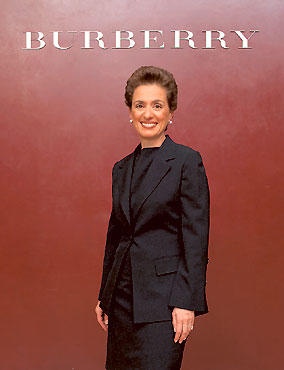
Bravo for Burberry

150-year old Burberry is one of the oldest brands around. It became famous for its invention of the gabardine waterproof raincoat and for providing kit to officers in the British armed forces during World War I.
Later in the century it was worn by Humphrey Bogart in Casablanca, Audrey Hepburn in Breakfast at Tiffany's and Peter Sellers in The Pink Panther. In 1955, GUS (Great Universal Stores) bought Burberry and has been its full owner until 2000. The flotation of Burberry brought the company back to its roots as an independent.
GUS had to sell off its most successful division under the pressure of analysts, who wanted the retail giant to focus on its core businesses, which include Argos and financial information provider Experian.
Burberry itself became burdened by its conservative image and, in 1998, by the recession in Asia which had proved a sales stronghold.
In 1997, Burberry appointed Saks Fifth Avenue executive Rose Marie Bravo to rejuvenate the brand.
Bravo took control of a brand image that was stale. Burberry had a predominantly male customer base. Furthermore, the GUS group was reliant on licensees over whom it had little control and distribution was haphazard. In central London Burberry was sold in more than 60 stores, but the luxury brand was absent in Selfridges, Harvey Nichols or Harrods.
Within weeks of arriving at Burberry, Bravo had signed up Mario Testino, one of the world's most celebrated fashion photographers, and the blue-blooded model Stella Tennant for an image-changing shoot. However, Bravo had one small problem: she had no new clothes to drape over the willowy Tennant. The appointment of Italian designer Robert Menchetti to the division solved this problem. Since then, three distinct ranges have been created: Prorsum, an international high fashion collection; Burberry London, the core collection that accounts for 85 per cent of worldwide clothing sales; and Thomas Burberry, a younger, more casual collection, which was launched in London in 2005.
By the end of 1998, Burberry and its latest ranges were being lauded by the fashion press, Burberry had found its niche between some of the broadly distributed apparel companies and the pure luxury brands, with the brand being British brand as an unexpected plus.
Bravo’s transformation of Burberry's image has been remarkable, including the opening of landmark stores in Milan, New York, Knightsbridge, Barcelona and Beijing.
Bravo also restructured the business side. Burberry regained control of vital markets such as Spain, Japan and Asia, by renegotiating and buying back licenses.
By focusing on high fashion and a media blitz, Burberry renewed its brand's prominence.
It resulted in a spectacular revival of the brand. In 2000 the likes of footballer David Beckham, it-girl Tamara Beckwith and ex-Spice Girl Victoria Adams Beckham made the brand even more fashionable.
Bravo also tried new colors in the traditional beige plaid and put the pattern on everything from bikinis to shoes.
As a result, Burberry's trademark check became over-exposed. In Britain, Burberry lost its cool after being adopted as the uniform of the suburban yob. (Yob refers to lager louts, soccer hooligans, or anyone guilty of drunken behavior resulting in racist and sexist remarks, rampaging through the streets and roughing people up.)

Since Bravo’s contract expires in July 2005, Burberry decided to appoint Angela Ahrendts as Bravo's replacement.
Ahrendts joined Burberry from Liz Claiborne Inc., one of the leading apparel companies in the US, where she was responsible for women’s wear and men’s wear brands including Ellen Tracy, Juicy Couture, DKNY Jeans and Lucky Brand.

Will Ahrendts be able to rebuild Burberry as a niche and exclusive brand in a mass market? Will she be able to maintain the profit level that Bravo set?
Bravo wove her magic combining product diversification, cross-marketing and media blitz.
It will be interesting to see how Ahrendts will try to make both customers and stock holders happy.

Thursday, October 13, 2005

Do lawyers need marketing and PR?

Few legal firms believe in marketing and PR. This might cost them dearly in the long run for several reasons.
  1. The market has changed. As long as there are people, there will be conflicts and lawyers will be able to make a living. However, clients are becoming more and more savvy – Internet and blogs make juridical information available to everyone.
    A lawyer has to realize that his/her potential clients will be critical and want to keep posted each step of the way.

  2. Having a sterling reputation is not enough. Many lawyers still think that clients will come to them. Being well known and having a wonderful record of accomplishment will not have a pull effect. Law firms must actively seek out and search for clients. Just waiting for the knock on the door will not do it.

  3. Websites are necessary. Many law firms still have no website at all or minimal one that isn’t being updated. They still assume that having a contact page will suffice. Law firms must invest in professional websites that reflect the capabilities and track record of the law firm.

  4. Lawyers still think that they provide first and foremost professional services and ignore the client’s demand for full and upfront disclosure of pricing, procedures and risks.

  5. Law firms must realize that they are selling a product: namely themselves. Lawyers must therefore market themselves to the public.

  6. Competition. Many well-established law firms ignore market research on competitors. This might cost them dearly in the long run.

  7. Branding. Law firms are notorious for ignoring branding. They are reputation-focused, building on publications and won cases. All professionals are only as good at their last success and maintaining a flawless rack record in law is almost impossible due to the many outside factors that can influence a case or procedure. Lawyers should therefore be brand-conscious and build and nurture their brand.
What are the lessons that marketing can teach lawyers?
  1. Market research: identify potential clients, to keep abreast of changes in culture and trends that could influence legislation, to analyze the competition.
  2. SWOT analysis: identify strengths, weaknesses, opportunities and threats
  3. Positioning: position the law firm in the market, communicating its expertise, track record and price structure.
  4. Branding: trade name, logo, website, corporate colors etc.
  5. Promotion: newsletters, updates, sponsoring, adopting a cause
  6. Public relations: communicate with the public, with clients, with industry players.
  7. Media: trade magazines, local newspapers/radio/TV, national media and (depending on the expertise) international media.